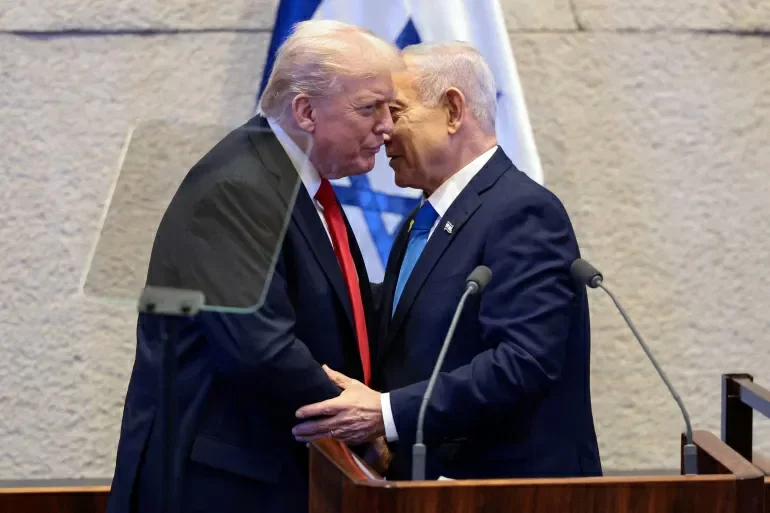
As Middle East hostilities entered their fifth consecutive day, a concerning pattern of religiously-charged rhetoric has emerged from American and Israeli leadership, framing the military campaign against Iran within apocalyptic theological narratives. The Council on American-Islamic Relations (CAIR) has condemned this discourse as dangerously anti-Muslim, highlighting how both nations’ officials are increasingly employing biblical terminology to justify ongoing operations.
Multiple reports confirm that U.S. military personnel received briefings characterizing the conflict as part of a divine plan to trigger biblical ‘Armageddon,’ with references to Book of Revelation prophecies about Christ’s return. This internal messaging parallels public statements from figures including Secretary of State Marco Rubio, who labeled Iranian leadership ‘religious fanatic crazies,’ and Pentagon spokesperson Pete Hegseth, who accused Iran of pursuing ‘prophetic Islamic delusions.’
Israeli Prime Minister Netanyahu amplified this theological framing by invoking the Torah’s Amalekites—symbolizing pure evil in Jewish tradition—to justify military action against Iran. This rhetoric mirrors previously employed justification patterns during Gaza operations, according to civil rights organizations.
Academic analysis reveals three strategic reasons for this religious framing: domestic mobilization through moral urgency, civilizational ‘us versus them’ narratives, and broader strategic meaning-making. The approach particularly resonates with American evangelical and Christian Zionist communities who interpret Middle East conflicts through end-times theology.
Historical precedents exist, notably President George W. Bush’s initial ‘crusade’ terminology following 9/11, though such language was subsequently moderated to avoid perceptions of religious warfare. Israeli leadership has consistently incorporated biblical imagery into political discourse, embedding contemporary conflicts within historical and existential frameworks.
While the underlying war remains geopolitical, experts warn that religious framing creates moral absolutism that complicates conflict resolution, elevates expectations, undermines diplomatic flexibility, and makes political compromises increasingly difficult to achieve.