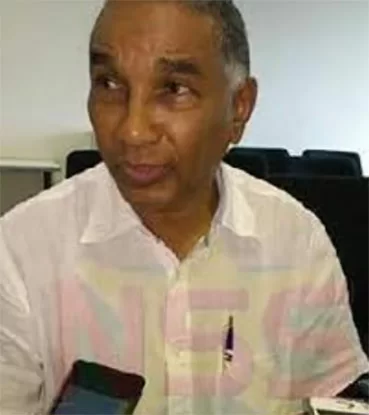
Five decades after gaining independence, Suriname’s political system remains trapped in a self-perpetuating cycle of coalition governments lacking developmental vision, according to sociologist Jack Menke. His analysis reveals how the intricate entanglement of political power, state-owned enterprises, and economic interests has structurally hindered national progress.
The country’s political democracy has sunk into what market vendors describe as a deep quagmire. As one vendor from Leiding 11A market noted: ‘The current NDP+ government consists of 7 governments: 6 coalition parties plus 1 opposition party. The previous VHP+ government consisted of 6 governments: 4 coalition parties and 2 opposition parties… It’s all the same pot with no difference between government and opposition who maintain each other.’ Since 1975, through 10 elections and 2 military regimes, no administration has successfully positioned Suriname on a sustainable development path.
Unlike Western Europe where economic power historically served as the means to acquire state power, Suriname experienced the reverse phenomenon. Political figures utilized state power to accumulate wealth through three primary channels: Dutch development aid, revenues from foreign mining operations (particularly bauxite, gold, and oil), and state-owned enterprises. The number of state companies has exploded from approximately 90 in 1988 to over 150 mostly loss-making entities in 2026, with recent corruption scandals at SLM, Melkcentrale, SZF, and Grassalco representing merely the tip of the iceberg within a bankrupt political system.
The concept of ‘mamio governments’—party-political coalitions without developmental vision—emerged even before independence in 1975. These arrangements created tension regarding the distribution of natural resources among party-political elites. An outdated short-term economic growth perspective managed through a cumbersome bureaucracy became the formula for political parties to win voter favor within a corrupted system of musical chairs.
The redemocratization process during and after the military period led to unprecedented concentration of power within political parties and erosion of democratic institutions. This began with three legislative products that established political parties as dominant power factors in governance: the 1987 Constitution, the 1988 Law on Political Organizations, and the 2005 Law on Recall Rights. The 1987 Constitution formally granted political organizations exclusive rights to participate in elections, enabling major parties and their financial interest groups to gain increased control over state structures and profitable mineral resources.
Public trust in democratic institutions has dramatically declined. In 2004, religious organizations enjoyed the highest trust at 41%, while the National Assembly (2%) and political parties (0.1%) scored lowest. A 2023 Americas Barometer study shows unchanged conditions. Meanwhile, the self-cleaning function of democracy through checks and balances within the three constitutional powers and other state institutions has reached critically low levels by 2026.
Menke proposes a moral-technical transitional cabinet comprising independent experts as a potential solution to break this cycle of democratic decline. This administration would develop a political system with ‘development by design,’ requiring diplomatic tact to engage integrity-conscious elements from politics and society. With public goodwill typically lasting no more than one year, the current administration—now seated for 230 days—faces diminishing public support amid its first major crisis, making cooperation with transitional arrangements increasingly imperative.