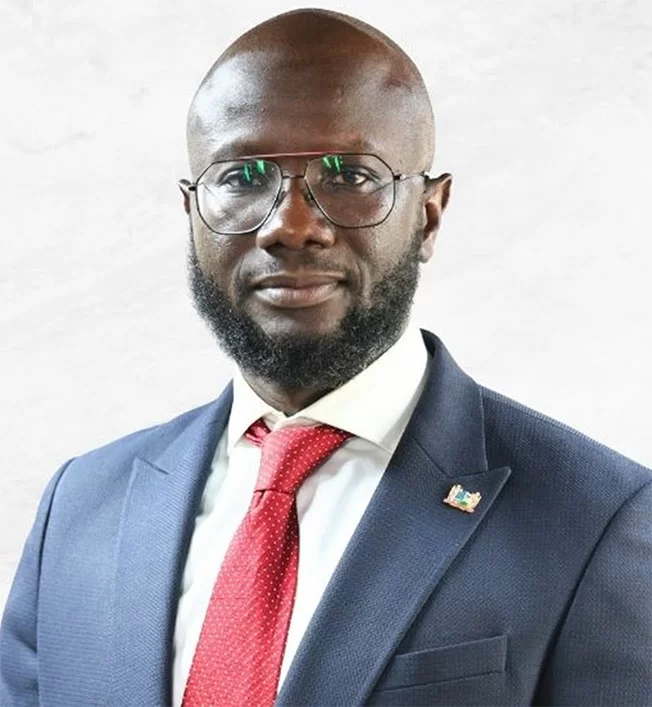
A renewed debate over freedom of expression has emerged in Suriname following the recent arrests of Rishano Santokhi, son of former President Chan Santokhi, and citizen Stefanus Gerson. The detentions have drawn sharp criticism from National Assembly member Ebu Jones of the opposition NDP party, who argues that criminal law is being misused to suppress dissent.
The arrests stem from provisions in Suriname’s Penal Code—commonly referred to as ‘gag laws’—that criminalize defamation, libel, and insult. Santokhi was detained following a November 2024 complaint by the Public Prosecutor’s Office regarding statements allegedly directed at Attorney General Garcia Paragsingh. Gerson faced similar charges for comments made on Facebook criticizing police authorities.
Assemblyman Jones contends that the most troubling aspect of these arrests is the procedural pattern: citizens are frequently detained for their expressions, with substantive judicial review occurring days after incarceration or not at all. ‘Individuals are first arrested and sometimes held for several days before being released. Judicial review only comes afterward,’ Jones stated, emphasizing that independent assessment should precede any deprivation of liberty.
Jones maintains that criminal law should serve as ‘ultimum remedium’—a last resort—rather than the primary instrument for addressing reputation-related conflicts. He advocates for civil litigation as the appropriate avenue for reputation disputes, allowing courts to determine whether unlawful expression occurred and whether damages are warranted.
The opposition lawmaker warns that criminal provisions risk being weaponized as tools of intimidation. ‘Criminal law must not be used to silence people,’ he emphasized, noting that freedom of expression constitutes a fundamental pillar of constitutional democracy.
Within the National Assembly, legislative proposals are underway to eliminate or revise the controversial gag laws. Jones, among the initiative’s sponsors, aims to strike a better balance between reputation protection and free speech rights. He simultaneously acknowledges that emerging technologies—including artificial intelligence and manipulated media—require new legal safeguards. ‘Mechanisms will need to be developed for these challenges,’ he conceded.
The recent arrests have underscored the urgent need for clear boundaries regarding criminal law’s application to public discourse. As Jones concluded: ‘Freedom of expression is a foundation of the rule of law. Criminal law should not be the first instrument for words, but the last.’