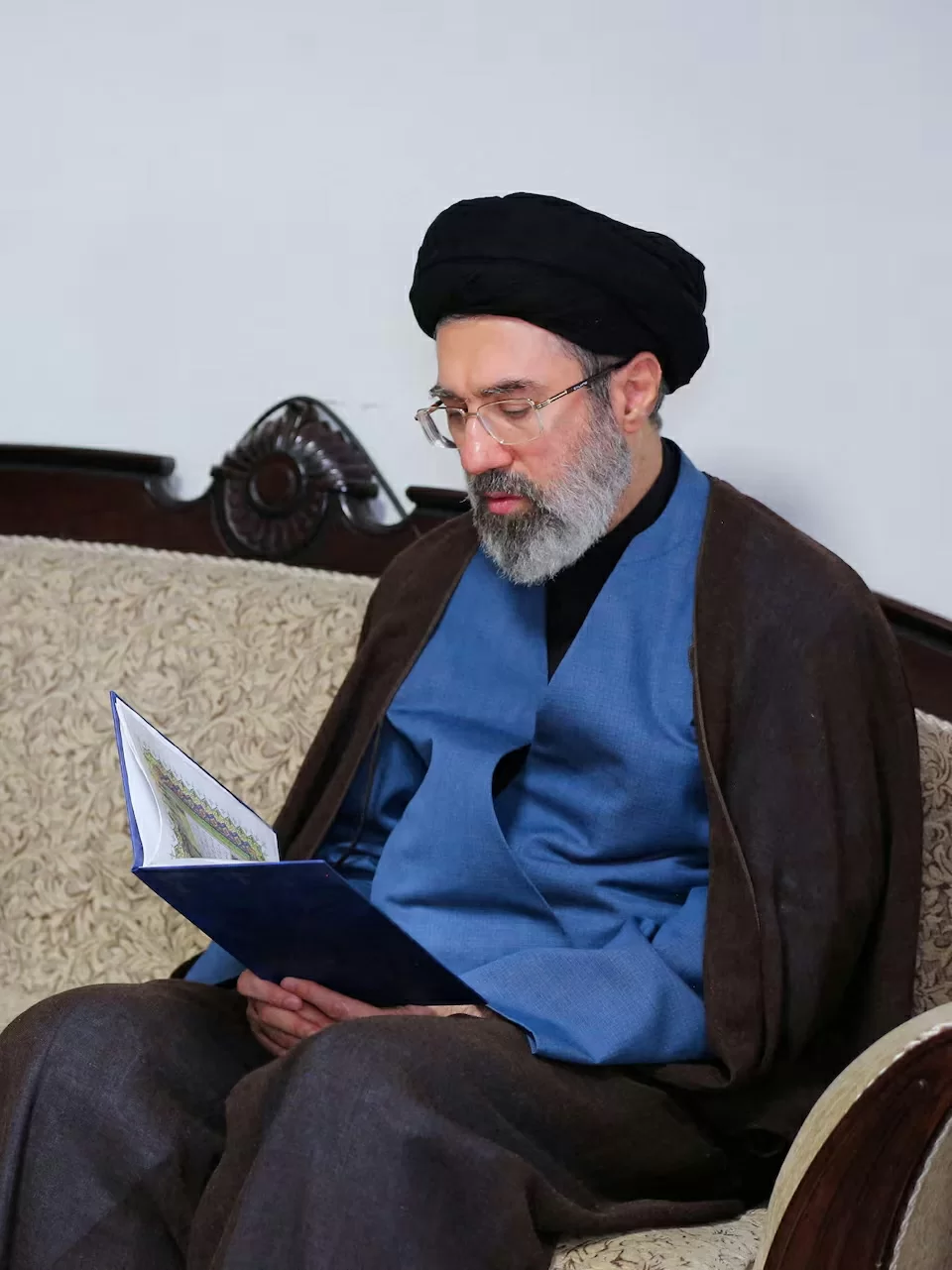
Following the assassination of Iran’s Supreme Leader Ayatollah Ali Khamenei in Saturday’s airstrike, attention has turned to his second son Mojtaba Khamenei as the leading candidate to assume the Islamic Republic’s highest authority. The 56-year-old cleric, who survived the same attack that killed his father, has spent decades cultivating critical alliances with Iran’s power structures.
Multiple Iranian sources confirm that Mojtaba has emerged as the establishment favorite to succeed his father, leveraging his extensive connections within the Islamic Revolutionary Guard Corps (IRGC) and influence among the clerical establishment. As a mid-ranking cleric with the title Hojjatoleslam, he has consistently opposed reformers seeking engagement with the West, particularly regarding Iran’s nuclear program.
Kasra Aarabi, research director for IRGC studies at United Against Nuclear Iran, notes that Mojtaba commands significant support within the IRGC, especially among younger radical elements. “If Mojtaba remains alive, he is very likely to succeed his father,” Aarabi stated, describing him as already operating as a “de facto mini-supreme leader.”
The Assembly of Experts, responsible for appointing the new leader, has “almost reached a decision” according to member Ayatollah Ahmad Khatami, who spoke to state television without naming specific candidates. The Supreme Leader holds ultimate authority over state matters including foreign policy and nuclear decisions.
Should he assume power, Mojtaba would inherit substantial challenges including a economy crippled by U.S. sanctions and potential domestic unrest. Many Iranians have demonstrated willingness to protest for greater freedoms despite harsh government crackdowns.
Born in 1969 in Mashhad, Mojtaba grew up during his father’s opposition to the Shah and later served in the Iran-Iraq war. He studied under conservative clerics in Qom, Iran’s center of Shia theology. Though never holding formal government office, he functioned as his father’s gatekeeper according to insiders.
His potential succession raises questions about dynastic politics in a country that overthrew a U.S.-backed monarchy in 1979. The U.S. Treasury sanctioned Mojtaba in 2019 for allegedly acting on his father’s behalf without official appointment, accusing him of collaborating with Quds Force commanders and Basij militia to advance regional ambitions and domestic repression.
Mojtaba’s wife, who perished in Saturday’s attack, was the daughter of prominent hardliner and former parliament speaker Gholamali Haddadadel, further cementing his establishment connections. His physical resemblance to his father and status as a sayyed (descendant of Prophet Muhammad) marked by his black turban contribute to his symbolic legitimacy, though critics note his clerical rank remains below the Ayatollah status held by his father and Republic founder Khomeini.