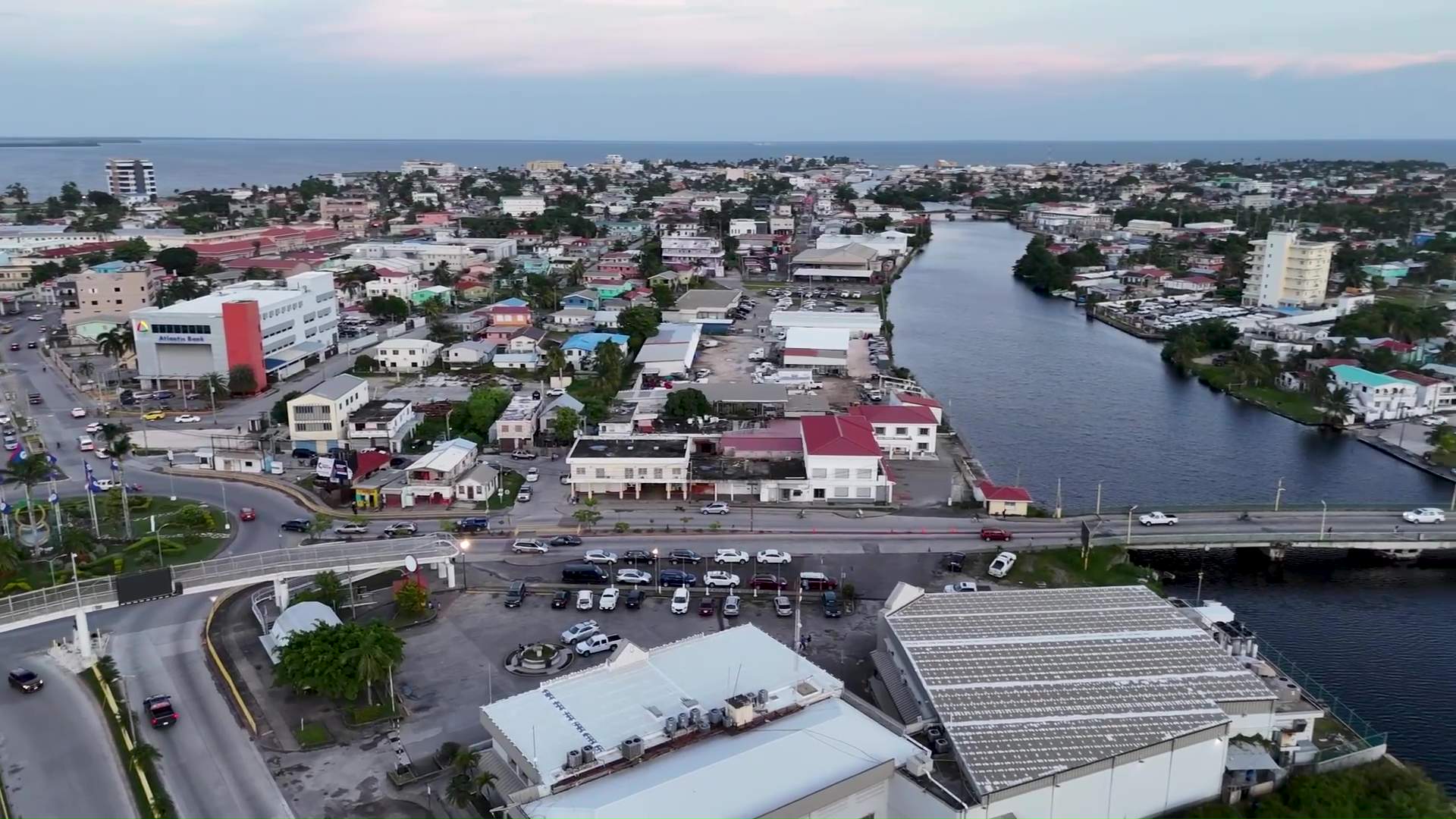
Belize City is poised to resolve a longstanding administrative impasse that has plagued its urban infrastructure management for decades. The Ministry of Infrastructure Development and Housing (MIDH) has initiated formal proceedings to transfer jurisdictional control of several critical roadway segments to the Belize City Council, marking a significant breakthrough in intergovernmental cooperation.
The breakthrough comes amid the most substantial infrastructure overhaul the city has witnessed in generations, featuring landmark projects including the Swing Bridge replacement, construction of the new BelCan Bridge, and comprehensive upgrades along major highway corridors. This infrastructural renaissance has created an opportune moment for clarifying administrative responsibilities that have long confused residents and officials alike.
Chief Engineer Evondale Moody confirmed that MIDH has formally proposed transferring authority over key sections including areas adjacent to Faber’s Road and Chetumal Street. The City Council has conditionally accepted responsibility, contingent upon MIDH completing scheduled enhancement works within the projected three-year timeline.
Moody elaborated on the current jurisdictional landscape: ‘As chief engineer, my authority encompasses all highways traversing the city, including Central American Boulevard. The highway network technically terminates at the Save-U Roundabout intersection with Phillip Goldson Highway and the leaf roundabout connecting to George Price Highway.’
The transfer agreement, expected to be formalized through a memorandum of understanding upon project completion, will redefine MIDH’s operational scope to focus primarily on lake I Boulevard and Chetumal Street connections to major highways.
Concurrent with these administrative developments, MIDH is implementing strategic reinforcements along alternative routes anticipated to bear increased traffic loads during construction phases. Engineering teams are addressing specific failure points along Chetumal Street near Westrac, where concrete pavement has deteriorated, despite these areas technically falling outside MIDH’s immediate jurisdiction.
The ministry is adopting a phased approach to infrastructure improvements, prioritizing flexible pavement solutions that accommodate ongoing ground consolidation while ensuring adequate traffic flow during the extensive construction period. This measured strategy balances immediate practical needs with long-term structural integrity considerations, demonstrating sophisticated urban planning coordination between central and municipal government entities.