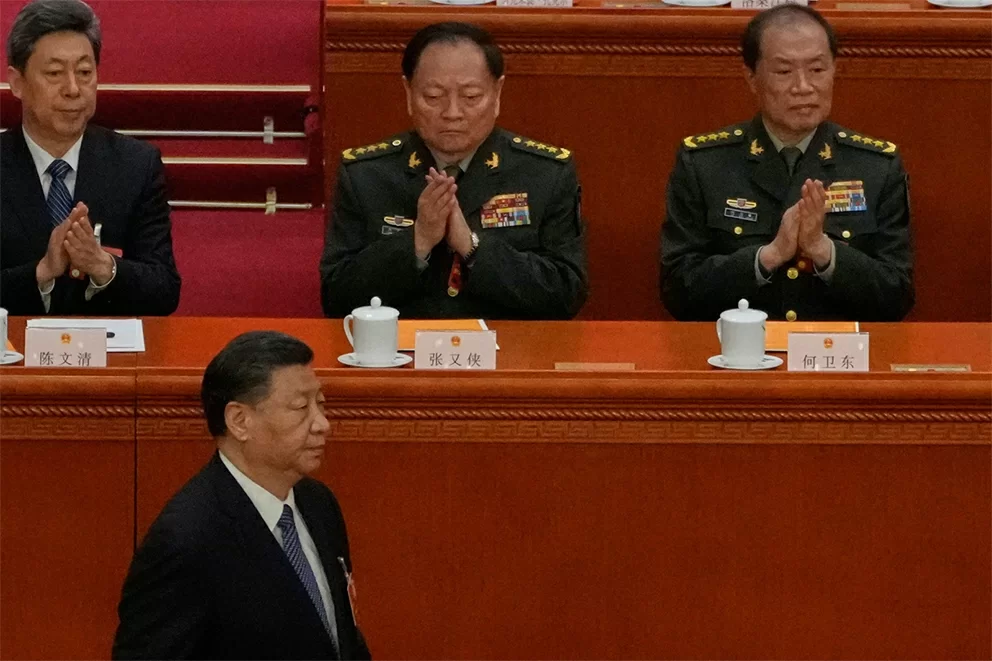
When the United States and Israel launched military strikes against Iran, China maintained a characteristically cautious diplomatic posture, waiting several hours before issuing its first official response. Beijing expressed “grave concern” over the escalation while calling for an immediate cessation of military operations and a return to diplomatic dialogue.
The following day, Chinese Foreign Minister Wang Yi condemned the attacks as unacceptable while reiterating China’s commitment to peaceful resolution through negotiation. Notably absent were any indications of direct intervention—an expectation that analysts consider unrealistic given China’s established foreign policy patterns.
This measured response reflects China’s consistent approach to international conflicts, including previous attacks on Iranian assets. While condemning violence rhetorically, Beijing typically avoids direct involvement, prioritizing its long-term strategic interests. The timing is particularly significant given the anticipated state visit of former U.S. President Donald Trump to Beijing, expected in early April.
China’s strategic calculus emphasizes regional priorities over global military projection. Despite possessing a rapidly modernizing military and conducting joint exercises with Iran—plus maintaining a military base in Djibouti—China’s defense focus remains concentrated on protecting its immediate interests in Asia, particularly regarding Taiwan and the South China Sea.
In the Middle East, China selectively engages where economic and diplomatic opportunities arise, as demonstrated by its successful mediation between Iran and Saudi Arabia in 2023. However, China views U.S. military engagements in Afghanistan and Iraq as cautionary tales to be avoided rather than emulated.
According to Craig Singleton of the Foundation for Defense of Democracies, China’s restrained response highlights the limitations of its global geopolitical influence: “Beijing’s reaction is predictably cautious and underscores China’s limited influence once hard power comes into play. China can express displeasure but cannot actually stop or meaningfully influence U.S. and Israeli military actions.”
Despite being Iran’s largest oil importer, China’s primary concern remains broader energy security rather than specific bilateral ties. With sufficient oil reserves to bridge four to five months of potential supply disruptions, Chinese refineries have adequate time to seek alternatives, with discounted Russian oil representing the most likely substitute.
Analysts unanimously dismiss the possibility of China providing military assistance to Iran beyond existing defense agreements, as Beijing seeks to avoid direct confrontation with the United States and its allies. As researcher Muhammad Zulfikar Rakhmat notes, China’s priority remains conflict resolution rather than escalation.