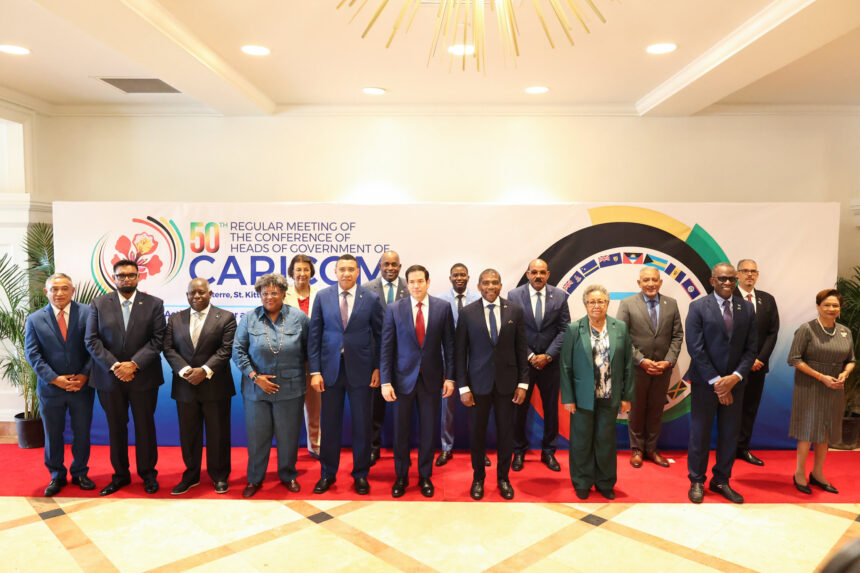
The recent CARICOM summit became a stage for Trinidad and Tobago Prime Minister Kamla Persaud-Bissessar to demonstrate precisely what ails Caribbean political leadership—a propensity for complaint over constructive action. Her performance revealed a troubling pattern where regional leaders excel at diagnosing problems but fail miserably at implementing solutions.
Rather than offering substantive proposals for strengthening regional integration, Persaud-Bissessar engaged in diplomatic theater that embarrassed the Caribbean community before international observers. Her public quarrel with colleagues over allegedly unanswered correspondence regarding a kidnapping case represented precisely the type of undiplomatic behavior that undermines regional credibility. When non-state actors, investors, and multilateral donors witness such public fissures, it damages the perception of stable regionalism necessary for meaningful partnerships.
The Prime Minister’s fixation on marginal issues—particularly her criticism of regional political parties supporting sister organizations across borders—exposed remarkable political immaturity. In a region where parties share common origins, histories, and ideological convictions, such cross-border support represents natural political solidarity rather than the crisis she portrays. Her objections ring particularly hollow given evidence of her own party members campaigning for others in the region.
More troubling still is Persaud-Bissessar’s selective application of principles regarding foreign relations. While criticizing CARICOM members for engaging with Venezuela, she conveniently ignores how these very relationships have provided hurricane relief, concessionary energy terms through Petrocaribe, and development support that benefited the entire region. Her alignment with Western powers appears so complete that she fails to recognize the contradiction in advocating Caribbean autonomy while simultaneously suggesting citizens shouldn’t ‘badmouth the US’ for fear of visa repercussions.
The Prime Minister’s approach to crime and security matters proves equally problematic. Her dismissal of CARICOM’s established principle of the Caribbean as a zone of peace—while ignoring how US militarization in the Caribbean Sea undermines this very concept—demonstrates a failure of coherent policy thinking. Similarly, her narrow focus on crime statistics without acknowledging the regional firearms pipeline from the United States shows an inability to address root causes.
Ultimately, Persaud-Bissessar’s summit performance revealed a leader more committed to short-term political positioning than long-term regional advancement. Rather than contributing to solutions for implementation deficiencies, outmoded governance systems, or geopolitical tensions affecting CARICOM, she offered only complaints and contradictions. This approach serves neither Trinidad’s self-interest nor the broader regional good, highlighting the urgent need for leadership that can translate popular agony into hope through concrete actions rather than empty rhetoric.