The Board of Commissioners (RvC) of Grassalco has confirmed the discovery of significant irregularities within the state-owned mining enterprise. Chairman Berto Sampie revealed to Starnieuws that the internal investigation into subsidiary GuySure has concluded, while phase two—examining Grassalco’s bank accounts, contracts, personnel, and vehicle fleet—is actively underway. The RvC now awaits directives from the company’s shareholder, the Surinamese government, regarding subsequent actions.
Sampie outlined the investigative structure, noting that the initial phase focused exclusively on GuySure operations. The current second phase involves comprehensive scrutiny of Grassalco’s broader financial and managerial frameworks, with external auditors still examining bank transactions, contractual agreements, staffing arrangements, and asset management. The council anticipates the auditor’s final report before proceeding with corrective measures.
A persistent concern involves restricted access to Guyanese bank accounts, where Grassalco’s finance department possesses view-only privileges. Sampie clarified that while financial staff can monitor transactions, only authorized personnel can approve payments, creating controlled yet problematic financial oversight.
The investigation has uncovered substantial payments to SLM, initially totaling 27 million USD, followed by an additional 13 million USD loan facilitated through Hakrinbank—of which 9 million has been received. These transactions occurred as separate disbursements rather than regular monthly allocations.
Scrutiny intensifies around GuySure’s shareholder composition, revealing that multiple individuals holding or having held shares simultaneously maintained (or previously held) employment with Grassalco. Notably, a Guyana-based legal advisor purportedly owns 20% of shares—a arrangement Sampie suggests violates standard corporate governance protocols. Frequent shareholder changes have further complicated the ownership landscape.
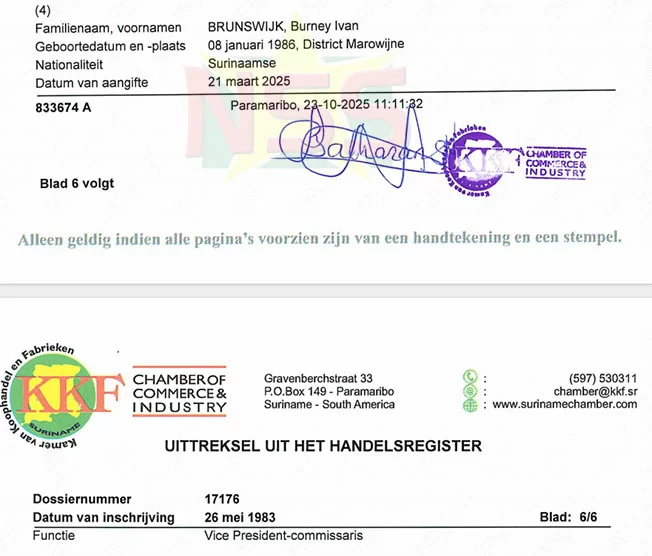
Legal validity questions emerge regarding signatures and documentation, particularly concerning the nonexistent position of “Vice Chairman of the Board” within the RvC’s formal structure—a role currently occupied by Burney Brunswijk. Sampie contends that without legitimate presidential or delegated commissioners, vice-presidential signatures lack legal authority. Evidence suggests some documents may have been backdated, including GuySure’s founding documents allegedly signed only after investigations commenced.
Regarding the ongoing probe into 4 kilograms of gold, Sampie acknowledged unresolved investigations and reassignments of initial police investigators, limiting the RvC’s capacity to intervene without formal law enforcement coordination.
The core issue remains governmental inaction. Despite presenting findings to both the minister and president, the RvC cannot implement definitive measures without shareholder approval. With Grassalco operating at a loss and lacking critical annual financial statements, the completed external audit now places decisive pressure on the government to chart the state company’s future course.