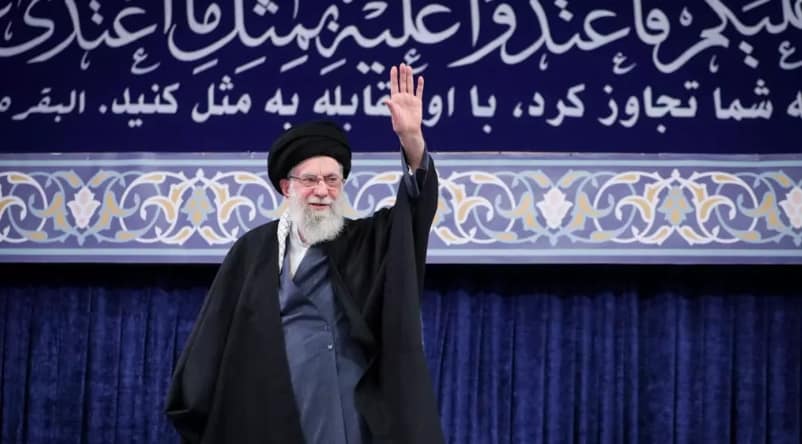
Ayatollah Ali Khamenei, Iran’s supreme leader who ruled with an iron fist for nearly four decades, was killed on February 28 during a coordinated military operation conducted by Israeli and American forces. The 86-year-old cleric, who had dominated Iran’s political landscape since 1989, died when his compound in Tehran was targeted in what officials described as a ‘preventive’ aerial campaign against Iran’s nuclear facilities.
Khamenei’s journey to power began in the religious circles of Qom, where he studied under Ayatollah Ruhollah Khomeini. His political awakening during the Shah’s regime led to multiple arrests and imprisonment for anti-monarchy activities. Following the 1979 Islamic Revolution, Khamenei rapidly ascended through the ranks, becoming president in 1981 at age 41 and eventually succeeding Khomeini as supreme leader in 1989 despite his intermediate clerical rank.
The controversial succession saw Khamenei consolidate power through constitutional amendments that established the principle of velayat-e-faqih (rule of religious jurists), granting him ultimate authority over all state institutions. He maintained control through brutal suppression of dissent, including the bloody crackdowns on the 1999 student protests, 2009 Green Movement, and the 2022 ‘Woman, Life, Freedom’ uprising sparked by Mahsa Amini’s death.
Internationally, Khamenei became the central figure in the geopolitical conflict over Iran’s nuclear program. His approval of the 2015 nuclear deal marked a rare moment of diplomacy, though the US withdrawal in 2018 under President Trump reignited tensions. Khamenei ordered the acceleration of nuclear activities in response, reaching unprecedented uranium enrichment levels.
The October 2023 Hamas attack on Israel triggered a chain of events that ultimately weakened Khamenei’s regional influence. As Israel systematically eliminated leaders of Iran’s proxy networks—including Hezbollah’s Hassan Nasrallah and Hamas’s Yahya Sinwar—Tehran’s defensive perimeter crumbled. The June 2025 twelve-day war saw direct Israeli strikes on Iranian nuclear and military sites, followed by US involvement that forced a ceasefire.
Khamenei’s death creates profound uncertainty for Iran’s political future, its nuclear program, and the survival of a regime that faces both international isolation and widespread domestic discontent. The operation that killed him represents the dramatic culmination of decades of confrontation between Iran and Western powers.