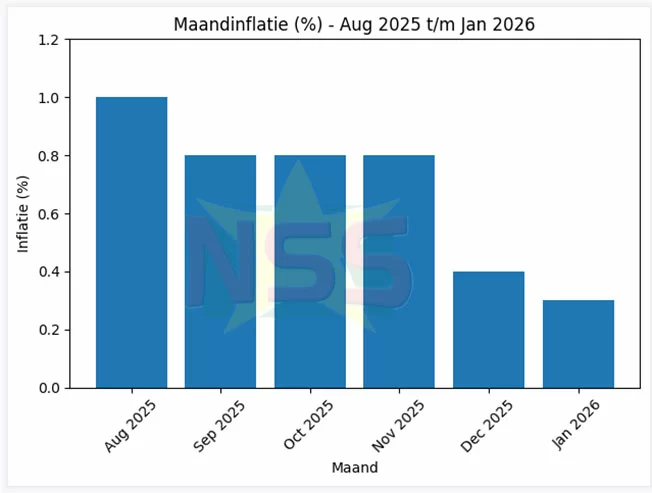
January 2026 witnessed a continued upward trajectory in consumer prices, with official data revealing a 0.3% month-over-month increase from December 2025. The more striking figure emerges from the annual comparison, showing prices have surged by 11% compared to January of the previous year, indicating persistent inflationary pressures within the economy.
The Consumer Price Index (CPI), a crucial gauge of inflation, climbed to 934.3 points in January from 931.4 the preceding month. This incremental monthly rise masks the substantial year-on-year price growth that continues to affect consumers’ purchasing power.
Analysis of spending categories reveals uneven price movements across different sectors. The most significant increases were recorded in housing and utilities, alongside alcohol and tobacco products. Conversely, the transportation sector experienced a slight reprieve with modest price decreases, providing some relief to consumers in this category.
The overall inflation rate, while appearing relatively moderate in monthly terms, conceals considerable volatility at the product level. Certain goods and services have actually become more affordable, while others have undergone substantial price hikes, creating a mixed experience for consumers depending on their spending patterns.
These inflation metrics are derived from comprehensive monthly price collections covering a wide basket of goods and services across seven districts. Notably, the regions of Marowijne, Brokopondo and Sipaliwini are excluded from these measurements, areas where prices are reportedly significantly higher, suggesting the reported inflation figures may not fully capture the economic reality across all demographic and geographic segments.