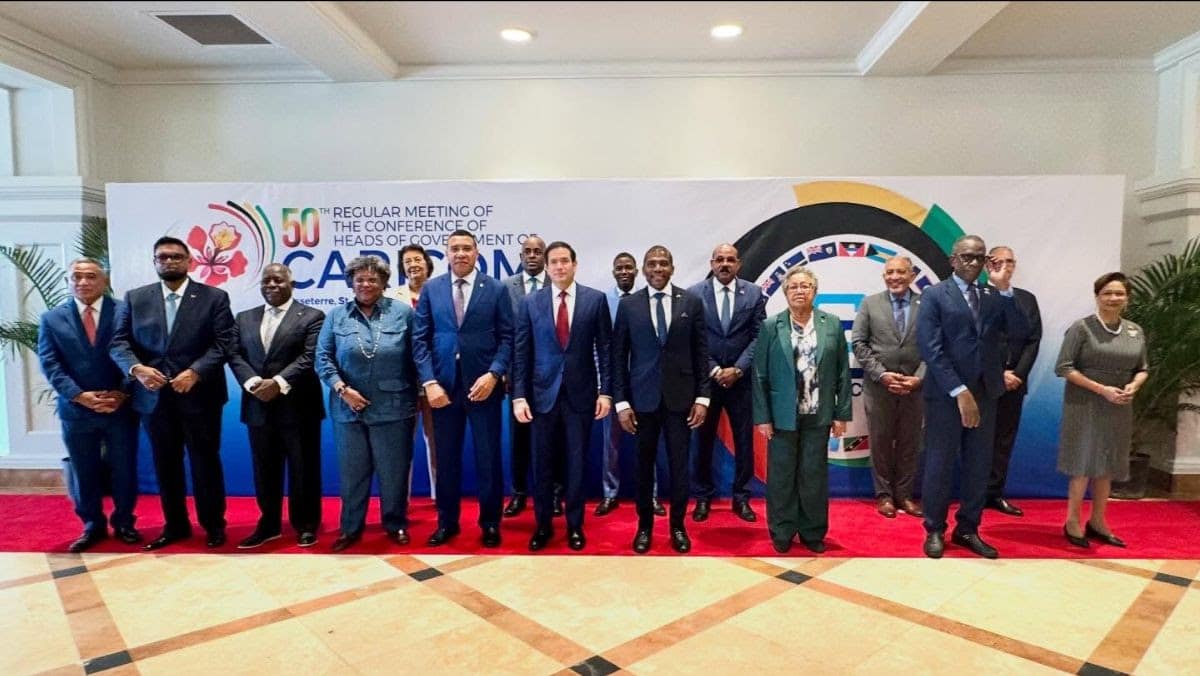
In a landmark address marking a strategic shift in foreign policy, U.S. Secretary of State Marco Rubio articulated a renewed American commitment to Caribbean nations during the 50th CARICOM Heads of Government Conference on February 25th. The plenary session became a platform for announcing Washington’s intent to re-center hemispheric relations after what Rubio characterized as a prolonged period of neglect.
Secretary Rubio presented a comprehensive framework for enhanced cooperation, identifying transnational crime as an immediate priority. He delivered a significant acknowledgment of U.S. responsibility in the regional weapons trade, stating that American-sourced firearms are fueling violence throughout Caribbean communities. “We recognize that many of these groups are buying weaponry from the United States,” Rubio told assembled leaders, “and we are committed and continue to work very hard with our law enforcement agencies to shut that down.”
The Secretary outlined a multi-faceted approach to security collaboration that extends beyond arms trafficking to include coordinated actions against international drug cartels. He emphasized intelligence-sharing mechanisms and sustained law enforcement partnerships as critical components for disrupting criminal networks operating across maritime borders.
Beyond security concerns, Rubio’s address encompassed broader economic and energy partnerships. He pledged to work with CARICOM members on energy security initiatives and economic development programs, framing this cooperation as part of rebuilding a new dynamic throughout the Western Hemisphere. This economic dimension complements the security partnership, addressing both immediate threats and long-term stability.
CARICOM Chairman and Prime Minister Hon. Dr. Terrance Drew responded positively to the American overtures while emphasizing Caribbean sovereignty. He welcomed the frank dialogue but underscored that any strengthened cooperation must be founded on mutual respect and must ultimately serve the safety, sovereignty, and sustainable development of Caribbean citizens. Prime Drew highlighted CARICOM’s collective strength as its unified voice in international affairs, suggesting partnerships would be evaluated through this lens of regional benefit.