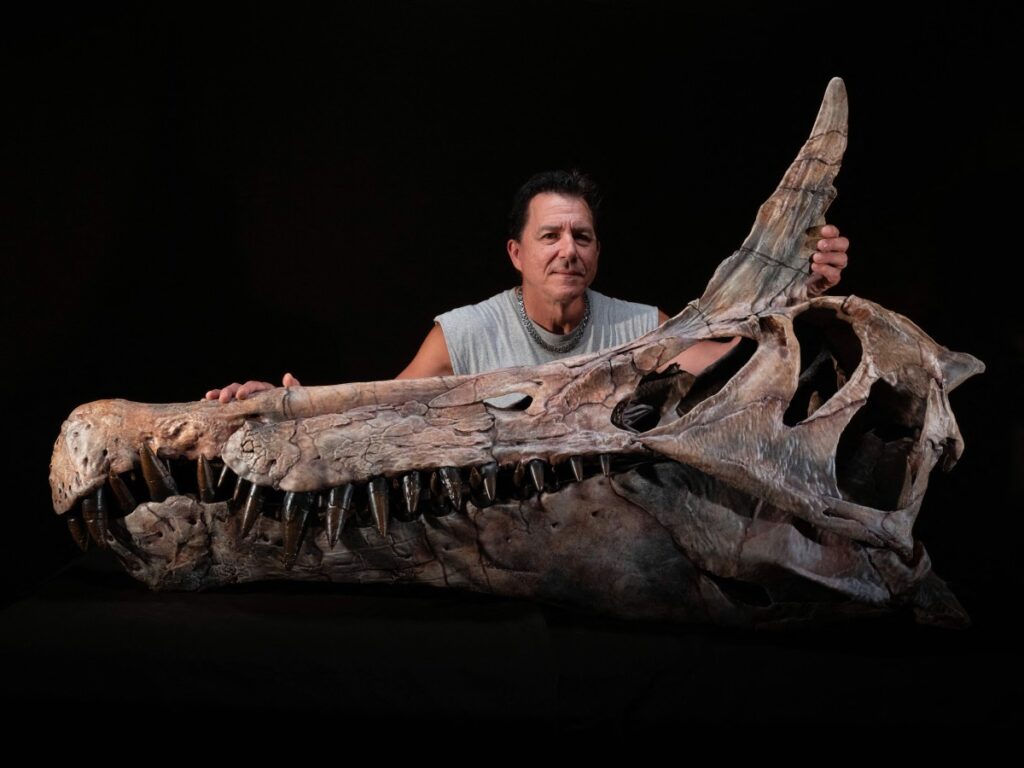
ABIDJAN, Ivory Coast — In a groundbreaking paleontological breakthrough, researchers have excavated a previously unknown dinosaur species from Niger’s desert landscape, marking the first such discovery in over a century. The colossal predator, named Spinosaurus mirabilis or “hell heron” by scientists, dominated Africa’s ecosystems approximately 95 million years ago during the Cretaceous period.
Led by University of Chicago paleontologist Paul Sereno, the international research team documented their findings in the prestigious journal Science, revealing a creature that potentially rivaled Tyrannosaurus rex in size and ferocity. The Spinosaurus mirabilis measured approximately 40 feet in length and featured distinctive anatomical characteristics including a remarkable 20-inch blade-shaped cranial crest and specialized interlocking teeth.
The discovery challenges previous scientific understanding of spinosaurid habitats and behaviors. Unlike coastal-dwelling relatives whose fossils were predominantly found near ancient shorelines, this inland discovery hundreds of miles from what constituted the nearest ocean during its era suggests broader ecological adaptation. “I believe this animal could wade effectively into aquatic environments,” Sereno explained, “but current evidence doesn’t support theories of fully aquatic behavior or proficient swimming capabilities.”
The research expedition commenced in 2019 following decades-old clues from French geologist Hugues Faure, who had reported finding a Carcharodontosaurus tooth in the region during the 1950s. Despite initial setbacks and dwindling morale, the team’s fortunes changed when a local Tuareg guide approached them with knowledge of “big bones” in an extremely remote location. After an extensive journey that raised concerns about their navigation and fuel supplies, researchers reached a site containing unprecedented fossil specimens.
The 2022 follow-up expedition involved 100 researchers and 64 Nigerien security personnel who carefully excavated the extraordinary find. Among the recovered elements were a nearly complete skull, substantial hind leg fragments, and multiple crest specimens that differed dramatically from any previously documented dinosaur morphology. The six-foot-long femur and perfectly preserved cranial structures provided unprecedented insight into this newly identified species that once thrived in what was then a lush riverine environment rather than today’s barren desert.
Sereno described the emotional impact of the discovery: “Witnessing these monumental remains emerging from the Saharan sands created an overwhelming experience that moved some team members to tears. This represents those rare Jurassic Park moments that define a scientific career.”