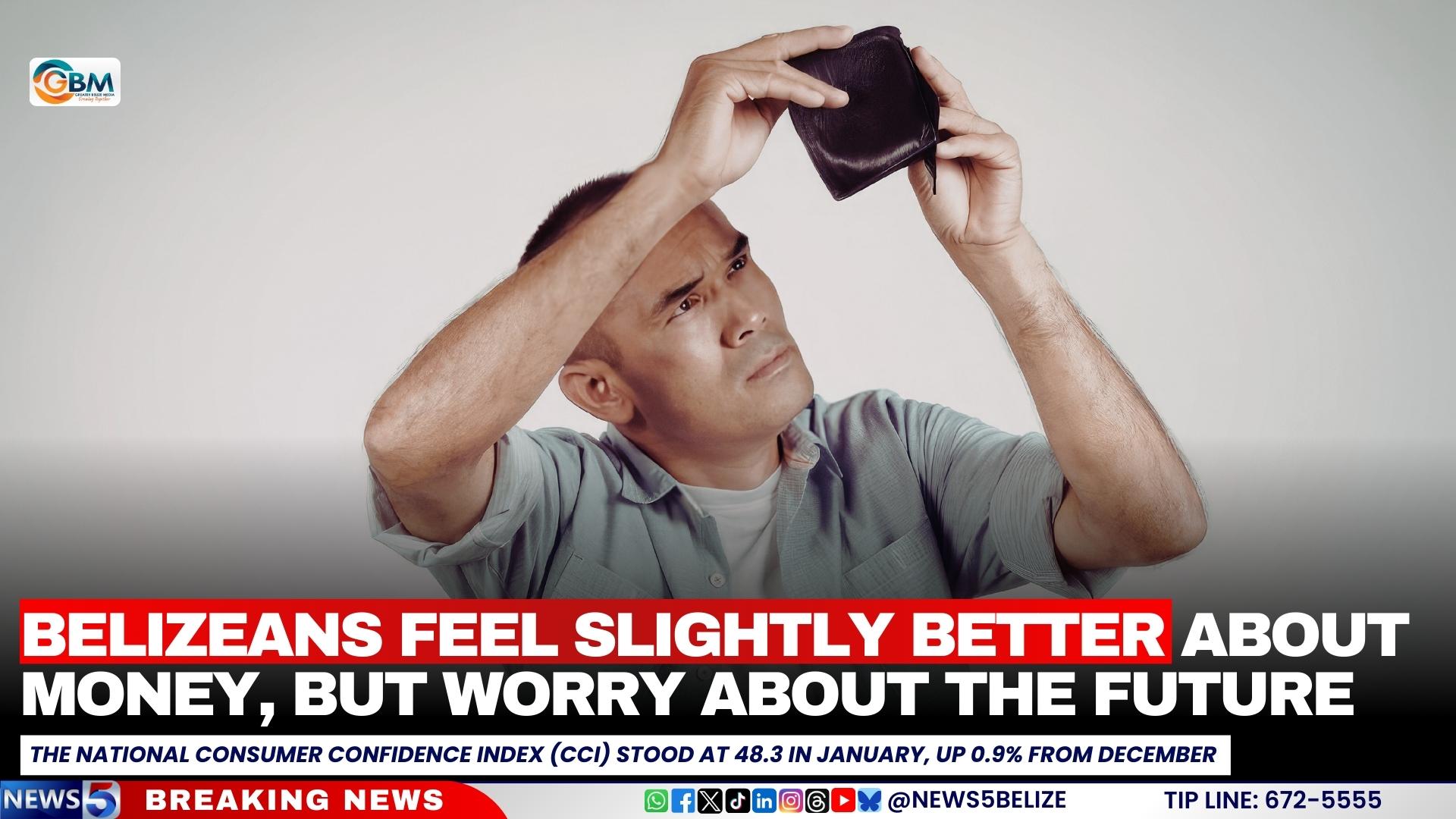
BELIZE CITY – Belizean consumers entered 2026 with cautiously improved economic sentiment, though underlying concerns about future prospects persist. According to newly released data from the Statistical Institute of Belize, the national Consumer Confidence Index (CCI) registered at 48.3 points in January, marking a modest 0.9% increase from December 2025’s reading.
The marginal uplift reflects a complex economic psychology among citizens, characterized by slightly improved perceptions of current conditions alongside growing apprehension about the coming year. The sub-index measuring present economic circumstances and household financial health demonstrated notable improvement, climbing 3.8% from 43.4 to 45.1 points. This indicates more households perceived their immediate fiscal situation as strengthened compared to the previous month.
Consumer willingness to consider major acquisitions—including real estate, vehicles, and high-value appliances—showed tentative improvement. While maintaining general caution, Belizeans demonstrated slightly greater openness to substantial purchases compared to the previous assessment period.
However, forward-looking optimism experienced a slight contraction, declining 0.7% as respondents expressed diminished confidence in the twelve-month economic outlook. This divergence suggests consumers feel better about current conditions while growing more apprehensive about future developments.
Regional analysis revealed significant geographic disparities. Corozal District recorded the most substantial confidence surge at 7.1%, propelled by strengthened expectations and improved present conditions assessments. Conversely, Stann Creek witnessed the sharpest decline at 13.7%, with residents reporting heightened pessimism regarding both durable goods purchases and future economic prospects.
Ethnic demographic breakdowns showed pronounced variations, with the ‘Other’ category and Maya community registering strengthened confidence. Meanwhile, Mestizo/Hispanic and Garifuna populations reported diminished economic sentiment compared to previous measurements.
The mixed indicators present policymakers with a complex economic landscape, requiring targeted approaches to address both immediate consumer concerns and longer-term confidence building.