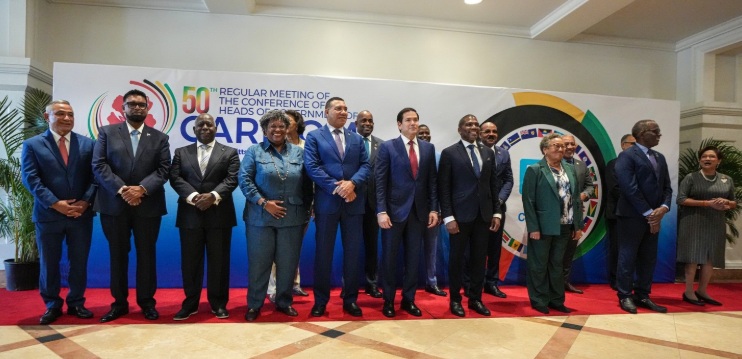
During a pivotal meeting with Caribbean Community (CARICOM) leaders in St. Kitts on Wednesday, United States Secretary of State Marco Rubio articulated a comprehensive energy cooperation strategy for the region. The American diplomat confirmed Washington’s readiness to collaborate with Caribbean energy producers in responsibly developing their hydrocarbon resources to generate national prosperity.
Rubio highlighted ‘extraordinary opportunities’ for economic advancement through collective energy initiatives. ‘Many countries represented here possess energy resources that you seek to explore responsibly and safely, generating wealth for your people. We aspire to be your partner in this endeavor,’ stated Rubio according to official State Department transcripts.
The Secretary specifically acknowledged Trinidad and Tobago’s established energy sector alongside emerging producers Guyana and Suriname, noting Grenada’s progressing exploration plans. This recognition underscores the shifting energy landscape in Latin America and the Caribbean.
In a significant geopolitical pivot, Rubio envisioned Venezuela’s potential future role in regional energy supply pending continued political and economic reforms. He asserted that Venezuela has demonstrated ‘marked improvements’ since Nicolas Maduro’s removal from power in January, citing the interim administration’s release of political prisoners, closure of the notorious Helicoide prison, and redirected oil revenues toward public welfare.
‘Regardless of individual perspectives on our Venezuela policy, the country is unequivocally better off today than eight weeks ago,’ Rubio declared, acknowledging some Eastern Caribbean nations’ previous affiliations with Maduro through bilateral and CELAC agreements.
The Secretary connected Venezuela’s stabilization to broader regional objectives, including democratic transitions in Cuba through fair elections. He projected that a legitimately governed, prosperous Venezuela could become an invaluable energy partner and source of regional stability for CARICOM members.