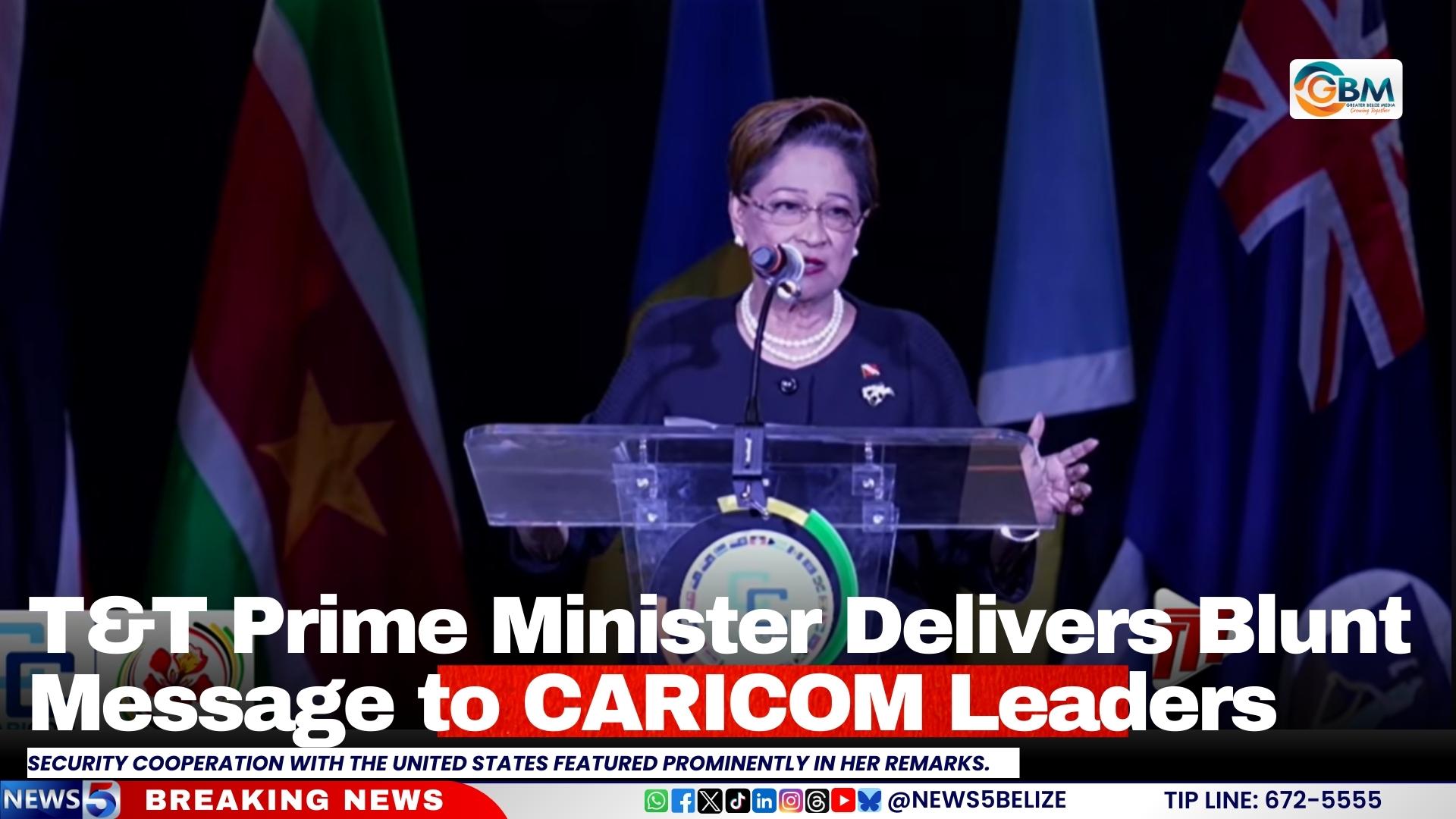
In a politically charged address that reverberated through the Caribbean Community, Trinidad and Tobago’s Prime Minister Kamla Persad-Bissessar delivered a stark message prioritizing national security over regional consensus during the 50th Regular Meeting of CARICOM in St. Kitts and Nevis on Tuesday night.
The Prime Minister articulated a firm stance on her nation’s autonomous security policies while questioning the regional bloc’s reliability during critical moments. ‘We will work with CARICOM moving forward,’ Persad-Bissessar declared, ‘but we cannot bind ourselves to the same political ideologies and security policies of the entire CARICOM.’
Her address highlighted specific grievances, including CARICOM’s perceived silence during security threats from Venezuela against both Trinidad and Tobago and Guyana. She further referenced a 2022 incident involving the removal of a Trinidadian citizen from another CARICOM state, noting her administration had yet to receive satisfactory explanations from the CARICOM Secretariat.
A significant portion of her remarks focused on Trinidad and Tobago’s security cooperation with the United States. Persad-Bissessar explicitly thanked former President Donald Trump and Secretary of State Marco Rubio for military collaboration targeting narcotics and arms trafficking from Venezuela, crediting this partnership with achieving a 42% reduction in homicides during 2025.
Addressing regional divisions, the Prime Minister defended her nation’s security choices: ‘When crime reaches critical levels, I cannot depend solely on our military resources,’ emphasizing her obligation to prioritize national security despite disagreements within CARICOM regarding foreign military presence.
On free movement within the Caribbean Single Market, Persad-Bissessar maintained theoretical commitment while citing practical limitations due to strains from undocumented migration. The address concluded with pointed criticism regarding regional democracy support, with the Prime Minister questioning contradictions in CARICOM’s stance and affirming Trinidad and Tobago’s refusal to endorse ‘dictatorship in Cuba or anywhere else.’