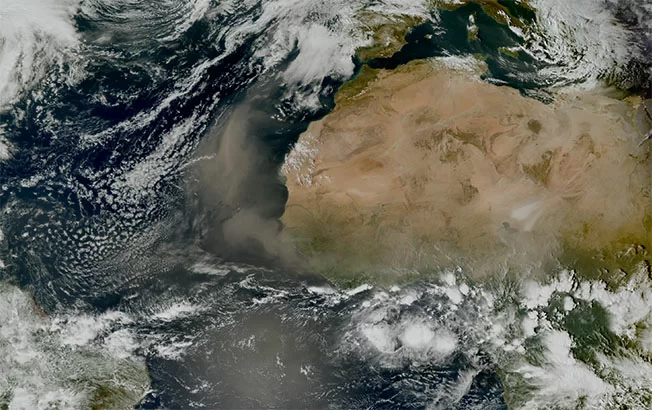
Suriname’s Ministry of Health, Welfare, and Labor has escalated public health warnings as an unprecedented concentration of Saharan dust engulfs the region, creating hazardous air conditions expected to persist through late February 2026. This atmospheric phenomenon, identified as the most significant dust infiltration of the year, has triggered official recommendations for vulnerable populations to implement protective measures immediately.
The current environmental crisis stems from two primary sources: the transatlantic migration of Saharan Air Layer particulate matter and localized pollution from waste burning and grassland fires. The Saharan dust plume, visible since February 22nd, contains elevated concentrations of PM2.5 particles—microscopic contaminants capable of penetrating deep into respiratory systems. These fine particulates similarly emerge from residential waste combustion practices, compounding existing air quality deterioration.
Medical authorities emphasize heightened risks for asthmatics, elderly residents, children, and individuals with pre-existing cardiac or pulmonary conditions. Exposure may precipitate asthma attacks, bronchial complications, and allergic responses including hay fever. High humidity levels interacting with dust particles may additionally provoke dermatological conditions such as eczema. Common symptoms encompass persistent dry coughing, sore throat, ocular irritation with excessive tearing, and respiratory discomfort with sneezing or nasal discharge.
The ministry’s comprehensive advisory outlines critical protective protocols:
– High-risk individuals should remain indoors with windows and doors secured
– Implementation of HEPA filtration systems or recirculating air conditioning
– Mandatory N95/KN95 mask usage outdoors (cloth and surgical masks provide inadequate protection)
– Maintain hydration to preserve respiratory moisture barriers
– Adhere strictly to prescribed allergy and asthma medications
– Employ water rinses or hydrating eye drops for ocular irritation
– Community vigilance regarding elderly and vulnerable individuals
– Complete cessation of waste burning activities
– Immediate medical consultation for respiratory distress, persistent cough, or severe allergic manifestations
Health officials underscore collective societal responsibility in mitigating health impacts during this exceptional environmental event, emphasizing that coordinated community action remains essential for public welfare protection.