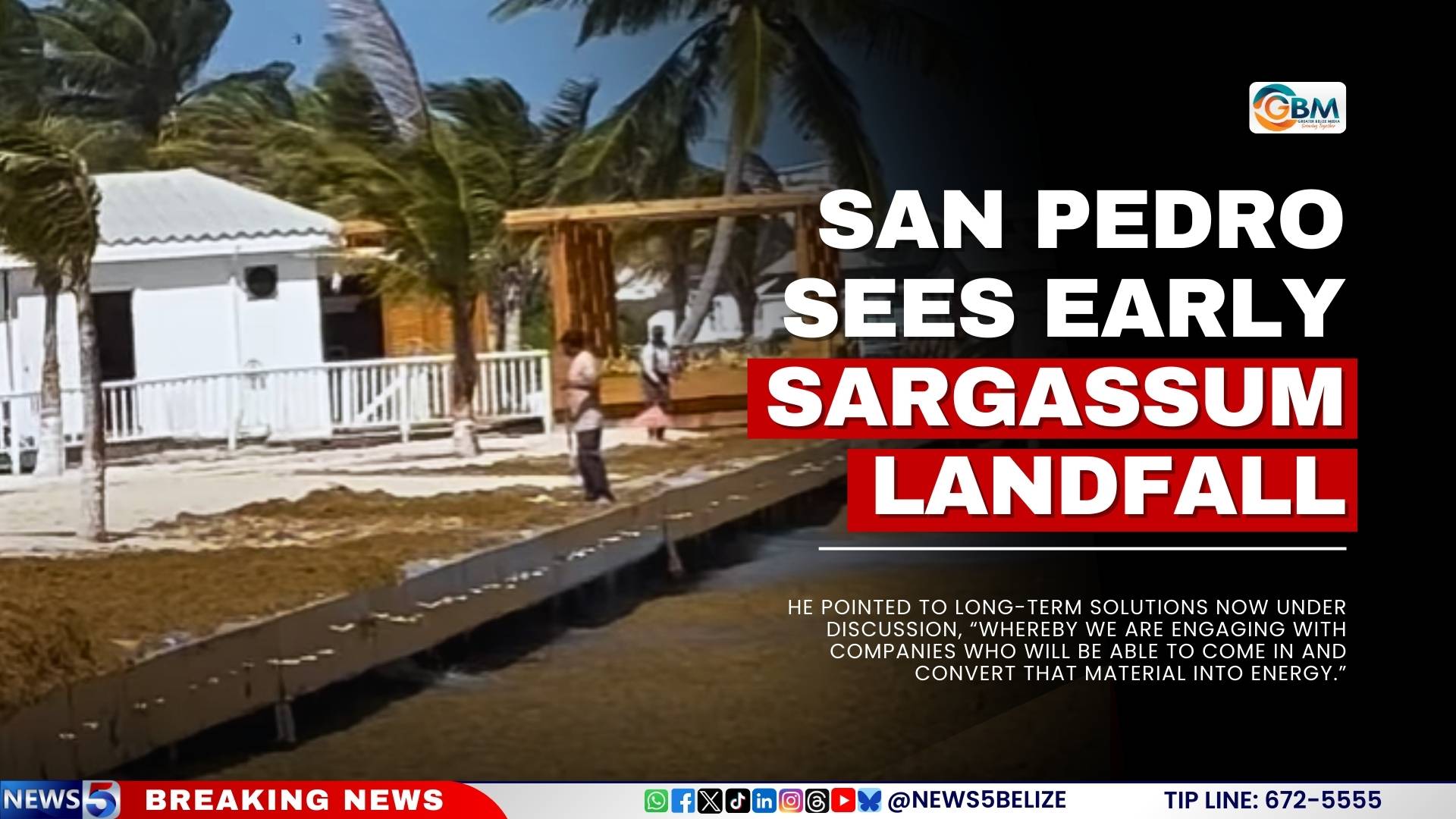
The coastal community of San Pedro, Belize, is experiencing an unusually early arrival of sargassum seaweed, with confirmed landfall occurring last Friday—months ahead of typical seasonal patterns. This premature emergence of the brown macroalgae has triggered immediate response protocols from national authorities.
Andre Perez, Belize’s Minister of Blue Economy and Area Representative for Belize Rural South, confirmed that while the situation raises environmental concerns, comprehensive preparatory measures are already in motion. “We’ve been proactively organizing through our dedicated Sargassum Task Force,” Minister Perez stated. “Current initiatives include securing necessary funding, deploying containment barriers, and allocating specialized beach cleaning equipment, particularly for vulnerable areas like Placencia.”
The Minister acknowledged the potential for cleanup operations to be overwhelmed by the substantial volume of incoming seaweed, emphasizing that the government is pursuing transformative long-term strategies beyond immediate containment. “We’re actively engaging with technology partners who can convert this biological material into renewable energy,” Perez revealed, outlining a visionary approach to ecological challenges.
According to meteorological assessments from Belize’s National Meteorological Service, satellite surveillance currently detects scattered sargassum formations offshore and along coastal peripheries. While northerly wind patterns are temporarily keeping most mats away from shore, forecasts indicate increased landfall probability by mid-to-late week.
The national alert system currently classifies sargassum impact probability as medium severity for several coastal regions including San Pedro Town, Caye Caulker, Hopkins, and Placencia, with anticipated effects described as moderate in scale.