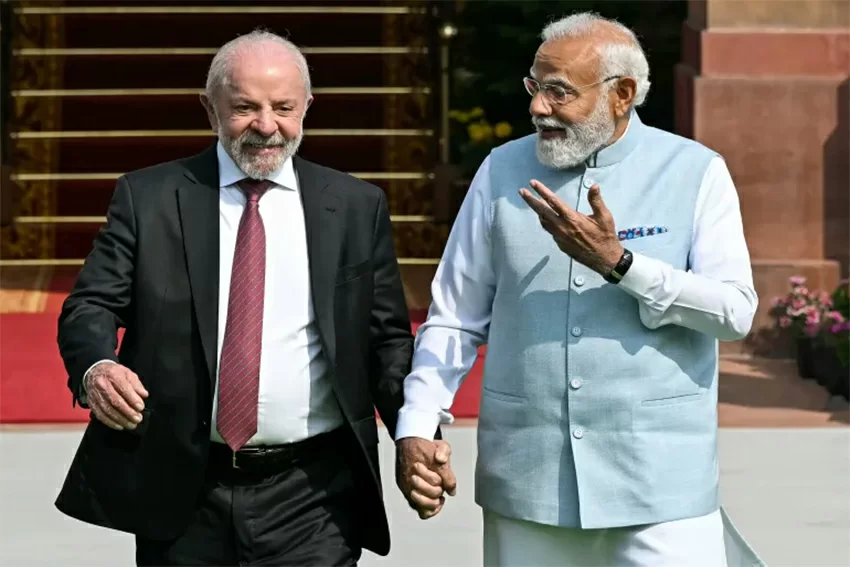
In a significant geopolitical move, India and Brazil have solidified a strategic partnership to enhance cooperation in critical minerals and rare earth metals, marking a decisive step toward reducing global reliance on Chinese supply chains. The agreement was formalized during Brazilian President Luiz Inacio Lula da Silva’s meeting with Indian Prime Minister Narendra Modi in New Delhi on February 21, 2026.
The bilateral meeting at Hyderabad House focused on strengthening trade relations and investment opportunities between the two economic powerhouses. Prime Minister Modi characterized the minerals agreement as ‘a crucial milestone in building resilient supply chains’ that would benefit both nations’ technological and industrial sectors.
This development comes amid growing global concerns over China’s dominance in rare earth elements and critical minerals, which are essential components in manufacturing electric vehicles, solar panels, smartphones, jet engines, and guided missiles. China currently controls approximately 90% of global rare earth processing and has recently tightened export restrictions, prompting nations to seek alternative partnerships.
Brazil possesses the world’s second-largest reserves of critical minerals after China, making it an ideal partner for India’s diversification strategy. The South American nation is also the second-largest producer and exporter of iron ore, a commodity experiencing rising demand from India’s rapidly expanding infrastructure and industrial sectors.
Beyond minerals, the two leaders signed nine additional agreements covering digital cooperation, healthcare, and various other sectors. Modi emphasized that Brazil represents India’s ‘largest trading partner in Latin America’ and expressed commitment to exceeding $20 billion in bilateral trade within five years.
‘Our trade relationship transcends mere numbers—it reflects mutual trust and strategic alignment,’ Modi stated. ‘When India and Brazil collaborate, the voice of the Global South becomes stronger and more confident.’
Expert analysis from Rishabh Jain of New Delhi’s Council on Energy, Environment and Water indicates this partnership follows India’s recent supply chain collaborations with the United States, France, and the European Union. Jain noted that ‘alliances with Global South nations are essential for securing diversified on-ground access to raw materials and shaping new rules for global trade.’
According to 2024 trade data from the Observatory of Economic Complexity, India exported $7.23 billion worth of goods to Brazil, primarily refined petroleum, while Brazil exported $5.38 billion to India, with raw sugar as the leading commodity.