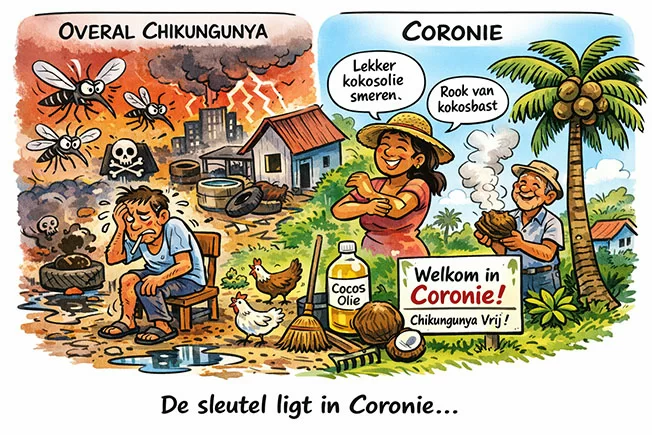
The coastal district of Coronie in Suriname has demonstrated remarkable resistance to chikungunya virus outbreaks during two major epidemic waves—first in 2014 and again in the current 2025-2026 surge—while surrounding districts experienced widespread infections. This epidemiological anomaly has drawn attention to the district’s unique cultural practices and environmental management.
Coronie, known as Suriname’s coconut district, maintains distinctive traditions that appear to offer unintended protection against mosquito-borne diseases. Residents regularly apply coconut oil to their skin, maintain exceptionally clean properties with minimal clutter, and practice smoke fumigation using coconut husks—a traditional method that effectively repels mosquitoes before they can breed or bite.
The Aedes aegypti mosquito, responsible for chikungunya transmission, thrives in stagnant water and human proximity. Coronie’s environmental discipline results in significantly fewer breeding grounds, directly reducing mosquito populations and transmission opportunities. Additionally, the district’s relatively isolated location and limited mobility compared to urban centers like Paramaribo decrease viral introduction risks.
This dual protection—environmental management and cultural practices—has created a natural barrier against chikungunya that persists while other regions rely on emergency interventions like fogging and crisis meetings. The Coronie case study suggests that effective public health interventions may begin at home rather than in conference rooms, emphasizing property maintenance, community habits, and traditional knowledge that predate modern epidemic responses.
The continued absence of confirmed cases across two separate outbreaks indicates this success is neither accidental nor temporary. It represents a sustainable model of community-level protection that combines environmental awareness with culturally embedded preventive practices, offering valuable insights for global public health strategies regarding mosquito-borne disease prevention.