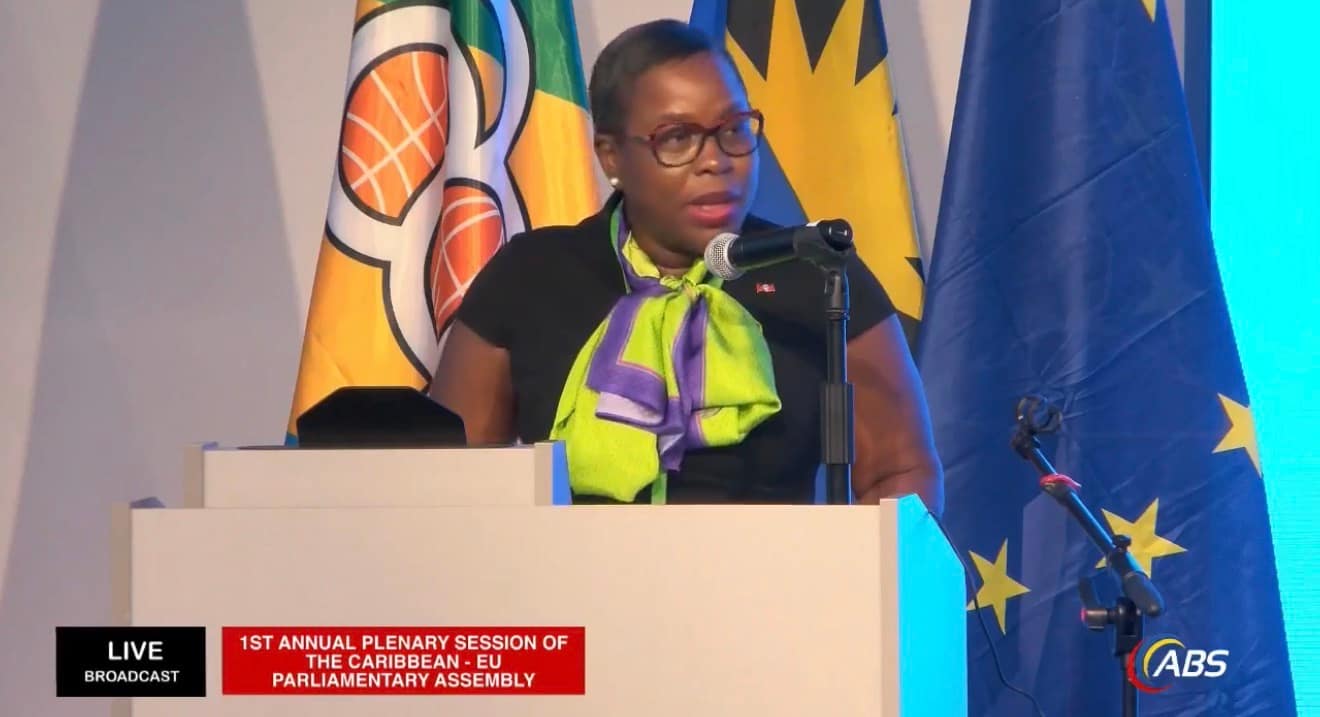
At the recent Caribbean–EU Parliamentary Assembly’s Women’s Forum, a compelling case was made for strategic investment to dismantle the systemic barriers hindering women’s advancement in business and politics. Senate President Alencia Williams-Grant delivered a powerful address, framing the issue not as a matter of charity but as one of critical economic efficiency. She identified women as one of the most significantly underfunded catalysts for sustainable growth in the region.
Despite women owning approximately 40% of micro, small, and medium-sized enterprises across the Caribbean and holding prominent roles in key sectors like tourism, hospitality, and agro-processing, a stark financing disparity persists. Williams-Grant revealed that average loans granted to women-led businesses are a mere $156,000, a figure dwarfed by the $1.54 million average allocated to male-owned enterprises. This severe capital constraint directly inhibits their capacity to scale operations, secure additional funding, and even launch viable political campaigns.
The Senate President articulated a vicious cycle where economic exclusion fuels political exclusion, which in turn reinforces economic marginalization. To break this pattern, she advocated for a comprehensive policy approach. Her proposals included channeling corporate social investment into specialized business incubators for women, supporting NGO-operated childcare services, and implementing widespread financial literacy and leadership development initiatives.
Echoing these sentiments, Senator Kiz Johnson emphasized the urgent need to address the political representation gap, suggesting the serious consideration of quota systems. She highlighted existing supportive mechanisms, such as the Prime Minister’s Entrepreneurial Development Fund—noting its 47% female participation rate—and various capacity-building programs administered by the Antigua and Barbuda Investment Authority, as foundational models for future expansion.