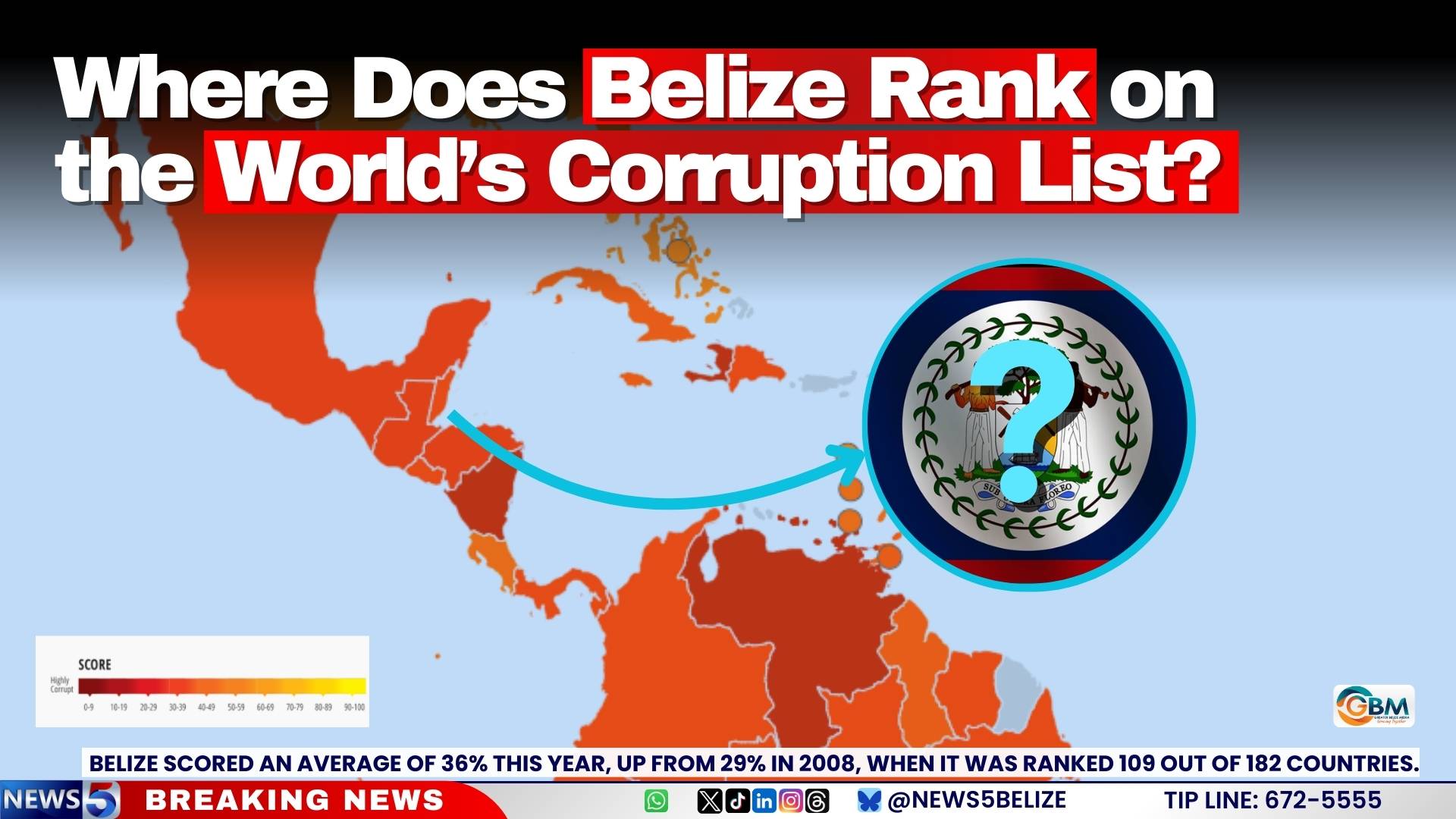
After an 18-year absence from international corruption monitoring, Belize has regained its position on Transparency International’s influential Corruption Perceptions Index (CPI). The Central American nation’s reappearance on the 2026 index marks a significant development in global governance tracking, providing both encouraging signals and sobering realities about the country’s anti-corruption efforts.
According to Cesar Ross, Director of Belize’s Good Governance Unit, the country’s return to the index followed concerted efforts to meet Transparency International’s stringent data requirements. “The absence since 2008 resulted from insufficient international analysis,” Ross explained. “Only two agencies had been producing data assessments for Belize, while the CPI mandate requires at least three independent evaluations.”
The newly published index reveals Belize achieved a score of 36%, representing a seven-point improvement over its last recorded assessment in 2008. This advancement moved the country from position 109 to 104 among the 182 nations evaluated. However, Ross emphasized that while numerically positive, this progress must be contextualized within global anti-corruption developments. “We must consider why we haven’t been advancing more rapidly compared to international standards,” he noted.
Ross characterized the CPI not as an endorsement but as a diagnostic tool offering external perspective on governance quality. The ranking provides comparative analysis against global counterparts and illuminates international perceptions regarding corruption levels within Belize’s public institutions.
The director highlighted that Belize’s reinstatement creates new accountability pressures, particularly regarding recently enacted legislation. Laws including the 2023 Civil Asset Recovery and Unexplained Wealth Act now face heightened scrutiny to demonstrate tangible impacts rather than merely existing as statutory accomplishments.
This development positions Belize within a framework of measurable international standards, offering benchmarks for future governance reforms and anti-corruption initiatives. The country’s return to the index establishes a foundation for tracking progress and identifying areas requiring intensified anti-corruption focus in coming years.