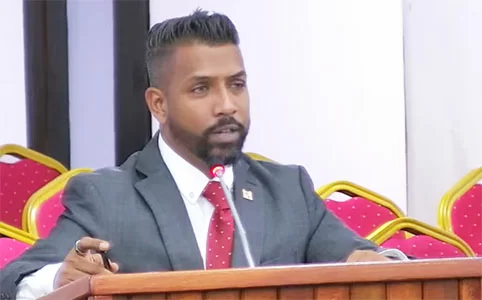
Suriname’s Minister of Justice and Police, Harish Monorath, has delivered a stark assessment of the nation’s immigration system during a parliamentary session in De Nationale Assemblee (DNA), acknowledging fundamental structural deficiencies that demand comprehensive reform.
Minister Monorath identified critical flaws in the 2017 legalization project, initially designed as a general pardon program to register undocumented migrants and grant legal residency status. The initiative, however, stalled at the registration phase, with many foreigners failing to complete subsequent renewal procedures, consequently reverting to illegal status. The minister specifically highlighted challenges with Guyanese citizens who frequently cross borders through informal ‘backtrack routes,’ effectively bypassing official immigration controls.
The minister emphasized that immigration policy cannot be addressed in isolation from border district realities, particularly in regions like Nickerie and areas bordering French Guiana. “For many residents in these regions, borders barely exist in practical terms,” Monorath stated, noting the intensive daily cross-border movement. He revealed that specialized border arrangements are under development alongside strengthened formal border checkpoints, with conceptual proposals to be presented to parliament subsequently.
In a separate but equally significant appeal, Minister Monorath advocated for redirecting 100% of fine revenues to his ministry, challenging the current distribution framework that allocates:
• 40% to Justice and Police
• 20% to the Ministry of Finance
• 20% to the Suriname Police Corps
• 20% to the Public Prosecutor’s Office
The minister characterized the fine revenue as an essential emergency fund for urgent operational needs when regular funding channels through Finance Ministry allocations prove insufficient. Critical expenses covered by these funds include accommodation costs for judicial staff attending court sessions in Nickerie, logistical expenses for process servers delivering summonses in remote districts, and immediate repairs for police and fire department equipment including malfunctioning pumps and water tanks.
“When these resources must first transit through Finance’s central treasury before we can reclaim them, we encounter significant operational challenges,” Monorath warned parliamentarians. He suggested enhancing penalty effectiveness through additional measures such as linking traffic violations to insurance premium increases, where accidents would trigger substantial insurance cost hikes.