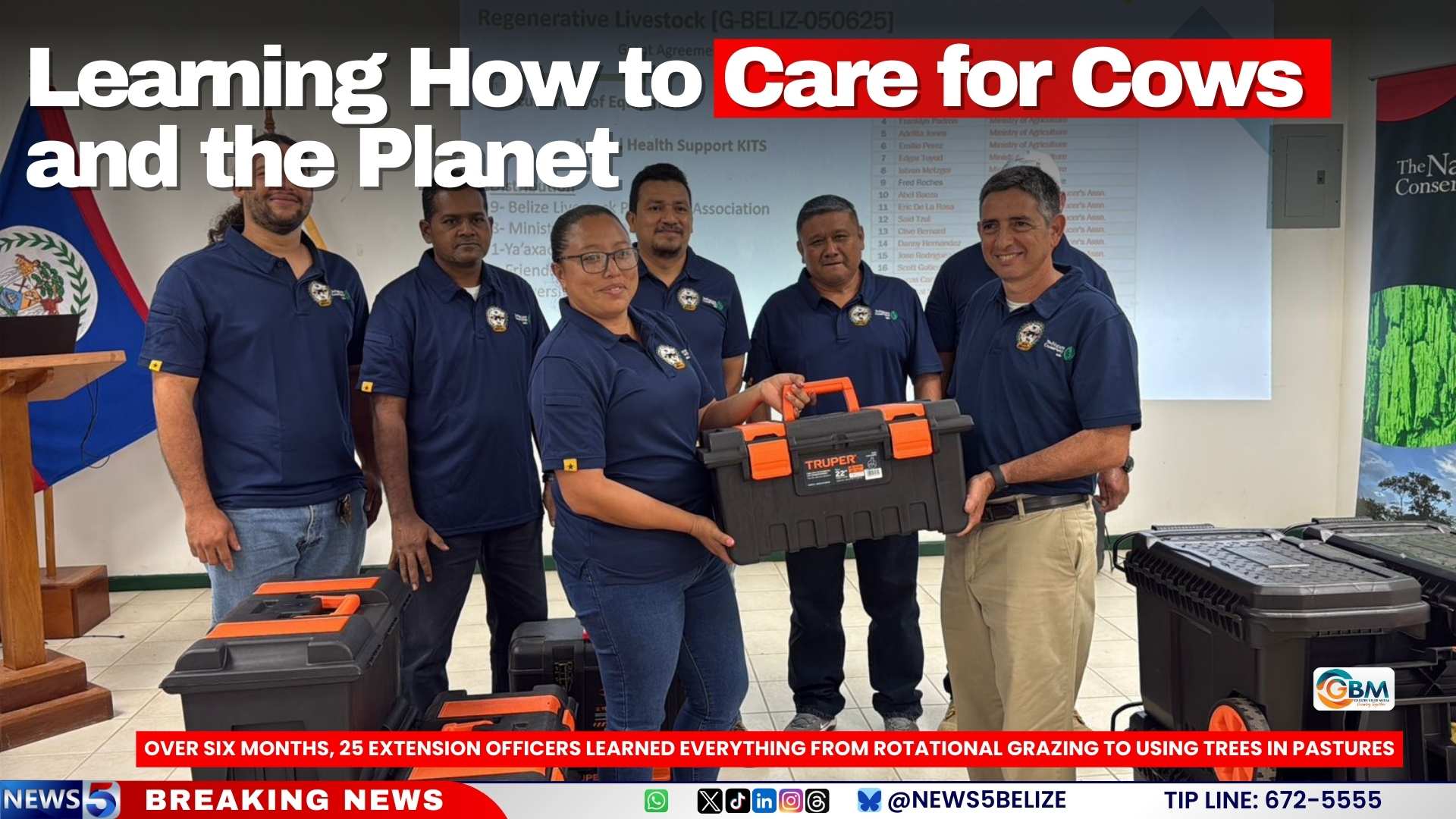
BELIZE – In a significant stride toward sustainable agriculture, Belize has launched an innovative training program aimed at transforming conventional cattle farming practices. The University of Belize Central Farm Campus recently hosted an intensive workshop that brought together the nation’s cattle farmers and agricultural extension officers to pioneer regenerative farming techniques.
The comprehensive initiative, spearheaded by Belize’s Ministry of Agriculture in collaboration with The Nature Conservancy, University of Belize, Belize Livestock Producer Association, and Belize Maya Forest, represents a paradigm shift in livestock management. Principal Agriculture Officer Belarmino Esquivel emphasized the program’s critical importance: “We are fundamentally transforming our cultural sector from traditional methods to practices that are productive, competitive, sustainable, and resilient with a regenerative focus.”
Over a six-month period, 25 extension officers received extensive training in advanced agricultural methodologies, including rotational grazing systems, integrated tree pasturing, enhanced animal nutrition, and comprehensive soil management strategies. The curriculum featured international expertise, with Dr. Martin Battaglia providing specialized instruction on regenerative agriculture principles.
The program’s second phase involves practical implementation across five model farms and 50 satellite farms, where trained officers will directly mentor farmers in adopting environmentally conscious practices. Luciano Chi, Regenerative Agriculture Specialist for The Nature Conservancy, highlighted the collaborative nature of the endeavor: “This represents a unified effort among multiple stakeholders committed to transitioning Belize toward a sustainable regenerative livestock system.”
Participants received specialized equipment kits designed to ensure both animal welfare and practitioner safety. The kits include protective gear, veterinary supplies, and demonstration tools for sustainable fencing systems. Daniel Juan, Livestock Lecturer at the University of Belize, explained: “We’re ensuring that personnel have the proper equipment to safely implement husbandry practices while safeguarding both human and animal wellbeing.”
The initiative particularly emphasizes soil health as a cornerstone of regenerative agriculture. Technicians received soil augers and analysis tools to help farmers implement data-driven soil amendment strategies, including the use of native cover crops and legumes to enhance soil fertility naturally.
This groundbreaking program positions Belize at the forefront of sustainable livestock management in Central America, potentially serving as a model for other nations seeking to balance agricultural productivity with environmental stewardship.