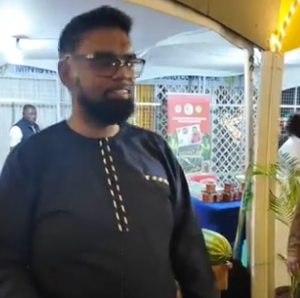
President Irfaan Ali of Guyana invoked core Islamic principles during his address at the opening ceremony of the National Ramadan Village 2026 on Sunday. Speaking at the event hosted by the Muslim Youth Organisation (MYO) on Woolford Avenue, Georgetown, the Guyanese leader emphasized that Islamic theology strictly prohibits transferring one’s wrongdoing onto others or blaming others for personal misconduct.
“Blaming others is considered a trait of the devil,” President Ali stated, characterizing such behavior as “an injustice that combines a minor sin into a major sin” according to Islamic teachings. The President’s remarks carried significant political undertones as they coincided with ongoing allegations from Azruddin Mohamed, leader of the We Invest in Nationhood (WIN) party and Guyana’s Opposition Leader.
Mohamed has repeatedly claimed that he financially supported President Ali’s People’s Progressive Party Civic (PPPC) during its opposition period from 2015 to 2020. These allegations emerge amidst serious legal challenges facing Mohamed and his father, Nazar Mohamed, who face sanctions from the US Treasury Department’s Office of Foreign Assets Control (OFAC).
The US authorities allege that between 2019 and 2023, Mohamed’s Enterprise omitted over 10,000 kilograms of gold from import and export declarations, evading approximately $50 million in duty taxes payable to the Guyanese government. The Mohameds are currently engaged in legal proceedings to avoid extradition to the United States, where they would face charges including wire fraud, mail fraud, and money laundering.
Guyana’s Anti-Money Laundering and Countering of Financing Terrorism (AMLCFT) Act establishes severe penalties for money laundering offenses, including fines up to GY$1 million and seven years imprisonment for individuals, and fines ranging from GY$200 million to GY$500 million for corporate entities. The High Court of Guyana has previously ruled in unrelated cases that unincorporated political parties lack legal personality, adding complexity to potential proceedings involving political financing allegations.