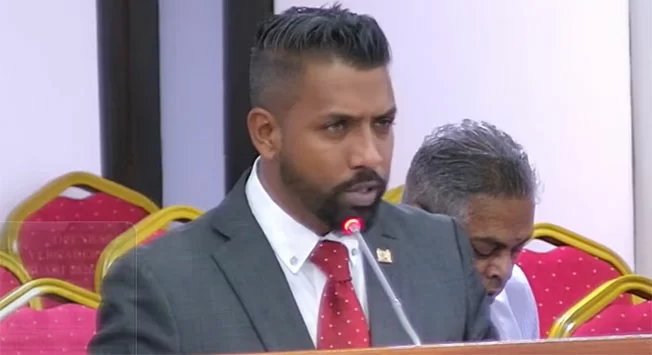
Suriname’s government has expressed cautious support for proposed judicial reforms while emphasizing the need for constitutional alignment and practical implementation. Justice Minister Harish Monorath addressed the National Assembly on Thursday, outlining the administration’s careful approach to restructuring the judicial system.
Minister Monorath characterized the proposed legislation as touching upon fundamental aspects of state governance rather than routine policy adjustments. “These reforms reach the core of our constitutional structure,” Monorath stated, emphasizing that any changes must be continuously evaluated against constitutional principles, separation of powers doctrine, and practical executability.
Regarding the establishment of a third judicial instance, the minister acknowledged the importance of enhanced legal development and protection while highlighting critical considerations. “We must thoroughly examine personnel capacity, financial implications, and organizational structure,” Monorath explained, noting that new judicial bodies create permanent state burdens and require sufficient qualified personnel.
The proposal to establish a college of prosecutors-general received similar scrutiny. Monorath stressed the necessity for clear demarcation of authority and responsibility within the Public Prosecutor’s Office, which occupies a unique position within the state apparatus. Structural changes must not create ambiguity regarding hierarchy, accountability, or command relationships.
Monorath emphasized the crucial balance between reform and institutional stability, noting that judicial stability remains essential for legal certainty and citizen/investor confidence. The minister underscored that legislation must be both legally sound and administratively workable.
The government consequently adopted a prudent approach: supporting judicial modernization and strengthening while prioritizing constitutional consistency, financial viability, and practical implementation. According to Monorath, all modifications should contribute to a stronger, more transparent, and independent legal system rather than responding to incidental events or temporary tensions.
Following the minister’s address, VHP parliamentarians Krishna Mathoera and Mahinder Jogi criticized what they characterized as the government’s passive stance toward initiative laws. They emphasized shared responsibility that cannot be delegated, noting that the executive branch ultimately implements adopted legislation. The assembly adjourned after the minister’s responses, with sponsors expected to present amendments based on discussions during the second round.