The Ministry of Agriculture, Livestock, and Fisheries (LVV) in Suriname has achieved significant cost savings of at least SRD 30 million over the past six months by implementing an innovative in-house maintenance approach. Rather than outsourcing repair and maintenance projects, the ministry has strategically handled numerous operational tasks internally, including critical maintenance of irrigation channels and drainage ditches.
Minister Mike Noersalim revealed that his department has successfully resolved between 30 to 40 emergency situations through this method. By utilizing ministry-owned machinery and coordinating fuel supplies, LVV has demonstrated substantial efficiency gains. This operational model, which has proven financially advantageous, will now be expanded across all districts nationwide.
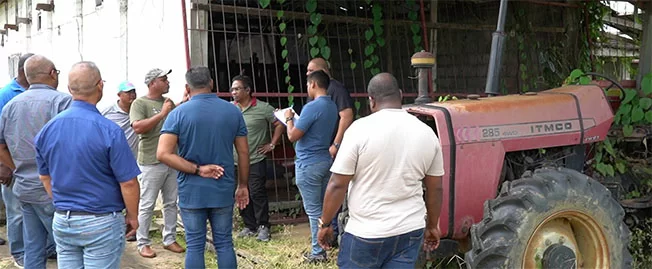
During a recent inspection tour of Saramacca district, Minister Noersalim identified widespread deferred maintenance issues affecting both infrastructure and ministry facilities. Numerous agricultural machinery and equipment were found in poor condition, though many require only simple interventions to become operational again. A malfunctioning pumping station in La Poule was specifically noted for causing flooding in residential areas during rainfall.
In response, LVV has established a collaborative framework involving district commissioners, private sector representatives, and local entrepreneurs. DNA member and business leader Jayant Lalbiharie has committed to restoring tractors to working condition, while District Commissioner Aniel Ramautar will facilitate the repair of thirteen bridges crucial for farmers accessing their agricultural lands. The ministry will provide necessary materials for these infrastructure projects.
This cooperative approach not only addresses immediate operational challenges but also establishes a sustainable partnership model where government agencies, district authorities, and private entities share responsibility for agricultural infrastructure maintenance. Minister Noersalim emphasized that this strategy will continue for smaller-scale projects, while acknowledging that major complex initiatives will still require public tender processes.