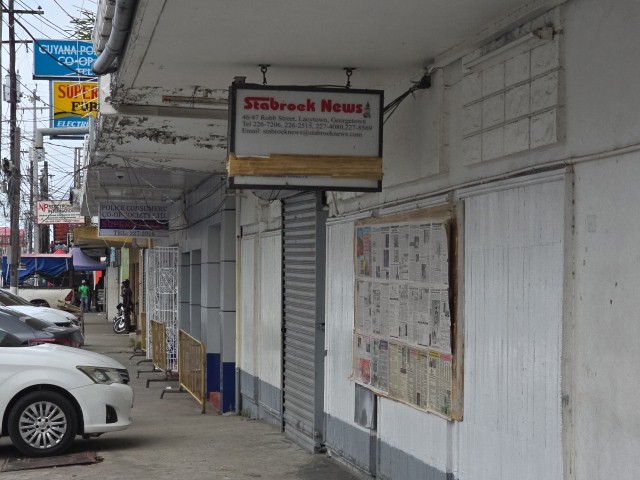
Guyana’s renowned independent newspaper Stabroek News will cease operations in March 2026 after nearly four decades of publication, citing fundamental market shifts toward digital platforms as the primary cause. Editor-in-Chief Anand Persaud revealed that the convergence of digital news consumption and advertising migration to online channels has rendered the print business model unsustainable.
The publication’s advertising revenue experienced catastrophic decline as major corporations including Digicel, Banks DIH, and Demerara Distillers Limited redirected marketing budgets toward digital platforms. This left the newspaper dependent primarily on statutory government advertising, occasional financial statements, and legal notices. Circulation numbers plummeted from historic peaks of 40,000 Sunday copies to a mere 4,000-5,000 copies currently.
Persaud emphasized that while political considerations may have marginally influenced some advertisers’ decisions, the core issue remains irreversible consumer behavior transformation. “People were so engrossed on their phones and what they can see in live real time,” he noted, adding that newspapers providing next-day coverage became functionally obsolete.
The publishing company, Guyana Publications Inc., maintains solvency and will fulfill all financial obligations to its 60 employees through severance packages and contributory pension schemes. The final edition will publish March 15, followed by voluntary liquidation proceedings.
This development mirrors regional trends, occurring shortly after Trinidad’s Newsday announced its closure following 32 years of operation. Stabroek News, established in 1986 during Guyana’s political transition from socialism, initially received funding from the US National Endowment for Democracy but evolved into an independent voice.
Despite exploring hybrid digital-print models over five years of evaluation, management determined that digital revenue streams proved too “ephemeral” to ensure long-term viability. Persaud concluded that the newspaper preferred “to leave with dignity” rather than compromise editorial independence through financial dependencies.