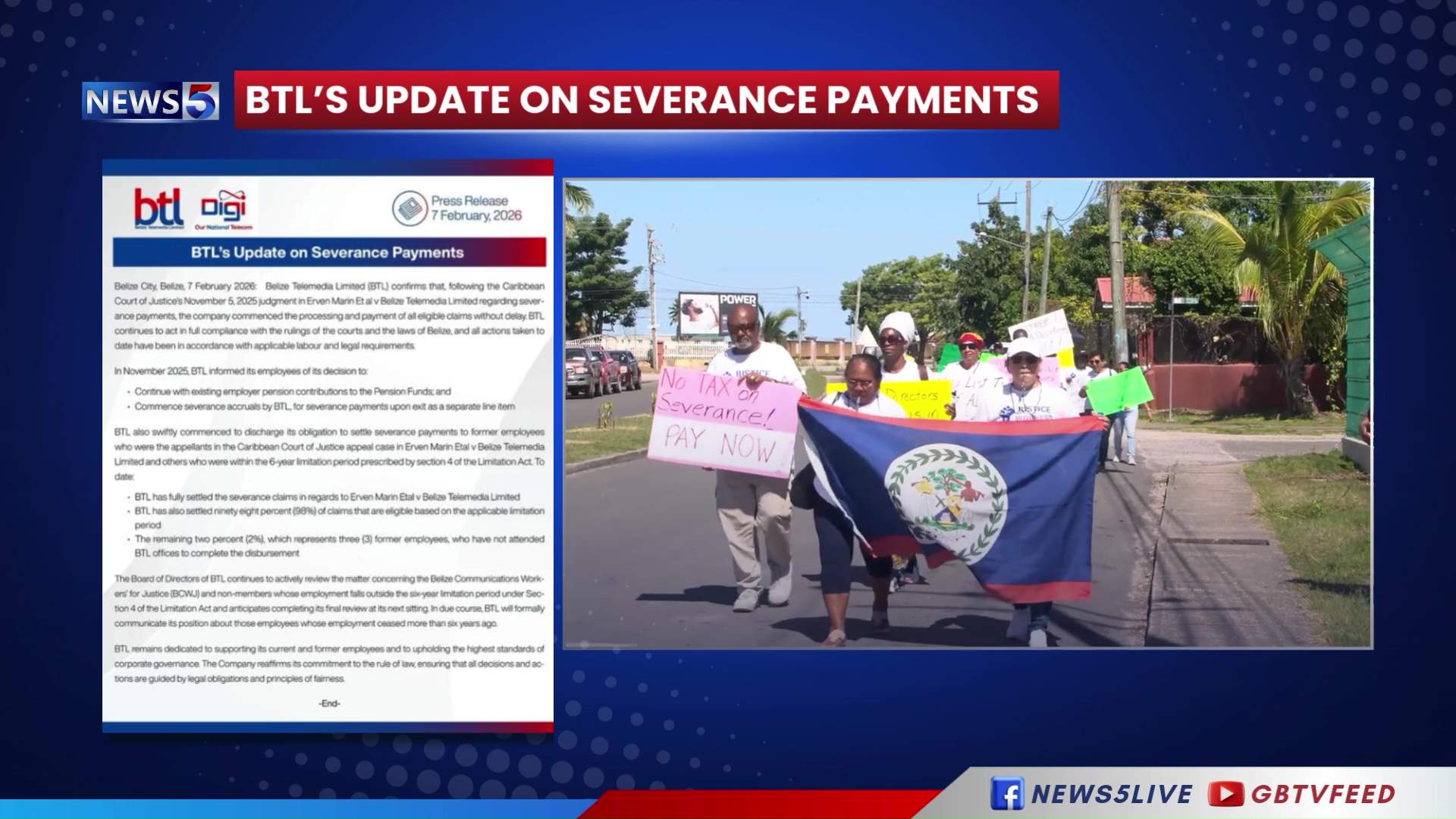
A contentious labor dispute continues to simmer in Belize as more than 170 former telecommunications workers remain entangled in a complex severance payment battle with Belize Telemedia Limited (BTL), despite a landmark Caribbean Court of Justice ruling intended to resolve such claims.
While BTL maintains it has substantially complied with the CCJ’s 2025 decision—asserting that 98% of eligible former employees have received their severance packages—the Belize Communications Workers for Justice (BCWJ) union contends that dozens of workers are being unjustly excluded due to contested statutory limitations.
The crux of the disagreement centers on Belize’s six-year limitation period for simple contracts, which BTL insists invalidates claims from workers who departed before 2019. However, affected former employees argue that the CCJ ruling specifically supersedes these domestic limitations, creating a legal paradox that has left them in financial limbo.
Emily Turner, former BCWJ president, expressed profound disappointment with BTL’s position: “We have engaged BTL previously in very diplomatic ways, expecting favorable feedback, especially after both the Minister of Labor and Prime Minister stated that statute of limitations doesn’t apply. Yet they continue dragging their feet.”
The timing of the dispute coincides with BTL’s prospective acquisition of Speednet, prompting weeks of organized protests across Belize. Demonstrators have demanded settlement of all outstanding severance claims before the company proceeds with its expansion plans.
Notably, many affected workers are senior citizens who had their severance benefits converted to pension plans over three decades ago—a practice the CCJ subsequently deemed illegal. Paul Perriott, a former BTL employee, emphasized the broader implications: “This isn’t just about BTL workers. This covers other unions that signed agreements exchanging severance for pension—all things the judge declared illegal.”
The BCWJ has threatened to escalate the matter internationally through their affiliations with global labor organizations if domestic resolution proves impossible. Turner affirmed their determination: “We’re disappointed, but we are not gonna give up. If we must take this internationally, we will.”
With BTL’s board expected to review the matter in their upcoming meeting, the standoff represents a critical test for labor rights jurisprudence in the Caribbean region, potentially establishing precedent for how international court decisions interface with domestic statutory limitations.