The Guyanese government has announced an ambitious five-year strategic plan aimed at revitalizing the financially troubled Guyana Sugar Corporation (GUYSUCO) and eliminating its dependence on state subsidies that currently amount to billions of dollars annually.
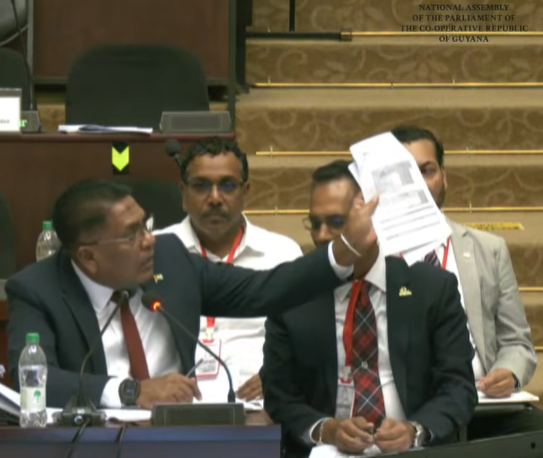
Agriculture Minister Zulfikar Mustapha revealed the turnaround strategy during parliamentary proceedings on Tuesday, February 10, 2026, in response to questioning from opposition parliamentarians. The plan represents a significant shift in approach for the wholly state-owned corporation, which has relied on government support for decades.
Central to the revitalization effort is an aggressive mechanization program that has already reached 41% implementation. Minister Mustapha detailed substantial investments in new agricultural machinery, including billet cutters, planters, and harvesters, scheduled for acquisition over the next five years. These technological upgrades are expected to dramatically improve operational efficiency and reduce production costs.
The corporation’s financial challenges are substantial. GUYSUCO currently owes approximately GY$1 billion to the National Insurance Scheme (NIS), while 81% of its GY$8.4 billion allocation will be directed toward covering part of its GY$20 billion wage and salary obligations.
Production statistics reveal the scale of the challenge. Sugar output has declined steadily over the past 15 years due to adverse weather conditions and industrial unrest, with 2025 production reaching only 59,200 metric tonnes against a revised target of 70,000 metric tonnes. The government has set an ambitious target of 100,000 metric tonnes for the current year, representing a 36% increase.
Minister Mustapha expressed confidence that factory rehabilitations, improved juice extraction rates, and increased use of plant cane would drive production improvements. He anticipates mechanization rates will reach 50-60% in the near future, significantly enhancing operational capabilities.
The political context adds complexity to the revitalization effort. The previous administration’s closure of four sugar estates and resulting mass layoffs became a central campaign issue in the 2020 general elections. The current government now faces the challenge of delivering on its promises to restore the industry while achieving financial sustainability.
Management accountability has been emphasized as a critical component of the turnaround strategy. Regular performance reviews and meetings with estate managers are being implemented to ensure progress toward the 2030 profitability target.