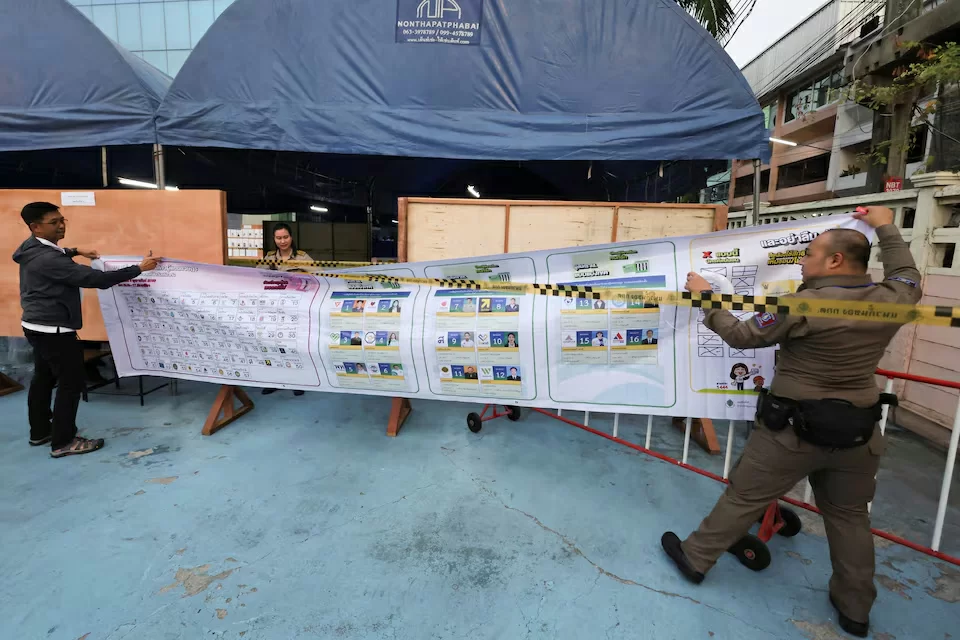
Two of Asia’s major democracies embarked on critical electoral journeys Sunday, with Thailand and Japan conducting nationwide votes that signal contrasting political trajectories for the region. While Japan appears headed toward stable conservative leadership under Prime Minister Sanae Takaichi, Thailand faces a fragmented political landscape with no clear majority in sight.
In Thailand, voters confronted a complex three-way contest between Prime Minister Anutin Charnvirakul’s conservative Bhumjaithai party, the progressive People’s Party, and the populist Pheu Thai faction backed by former premier Thaksin Shinawatra. Political analysts project that none of these competing forces will secure an outright parliamentary majority, potentially prolonging the nation’s political instability.
The election timing itself carries strategic significance, called by Charnvirakul amid escalating border tensions with neighboring Cambodia. Experts suggest this move aimed to capitalize on nationalist sentiments among the electorate. The progressive People’s Party, advocating for structural reforms, currently leads opinion polls but may fall short of the seats needed to form a government independently.
Adding another layer of complexity, Thai voters simultaneously considered a constitutional referendum that could replace the current military-drafted charter from 2017. This decision carries profound implications, as Thailand has experienced twenty different constitutions since the end of absolute monarchy in 1932, typically following military interventions.
Meanwhile, Japan’s Lower House elections presented a different scenario, with Prime Minister Takaichi positioned to secure a substantial victory. The nation’s first female prime minister leads a conservative coalition expected to maintain its parliamentary dominance, enabling continued pursuit of her policy agenda including tax reductions and enhanced defense capabilities particularly directed toward countering China’s influence.
Takaichi’s campaign received a significant boost from former U.S. President Donald Trump’s endorsement, potentially strengthening her conservative base while possibly alienating moderate voters. However, severe winter weather conditions across parts of Japan threatened to suppress voter turnout, adding uncertainty to the electoral process.
These parallel elections underscore the political divergence within Asia’s democratic systems. Japan moves toward consolidated conservative governance while Thailand grapples with political fragmentation, with both outcomes carrying significant implications for regional stability, economic policies, and democratic development in the coming years.