A profound crisis of confidence has engulfed Suriname’s judicial institutions following revelations about former President Chan Santokhi’s alleged interference with the Office of the Prosecutor General. The controversy centers on Santokhi’s repeated public statements suggesting he directed prosecutorial decisions, despite his recent parliamentary denials labeling such claims as “gross lies.
Multiple recorded instances show Santokhi employing language that implied direct control over prosecutorial matters. During press conferences and public appearances, he consistently used phrases such as “I have asked the Prosecutor General to investigate this case” and “I have given instructions to the Prosecutor General,” creating a perception of executive override of judicial independence.
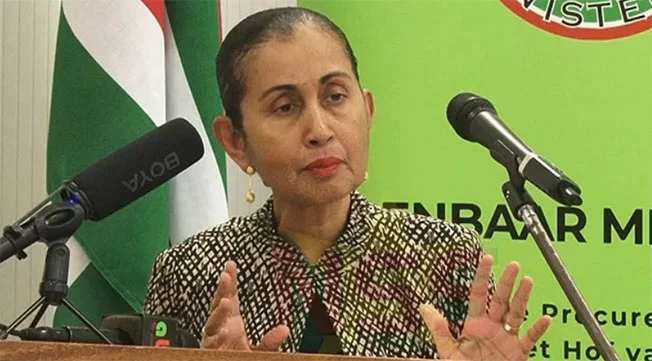
The damage to institutional credibility was starkly demonstrated by Prosecutor General Garcia Paragsingh’s response when questioned by journalists. Rather than defending the former president, Paragsingh explicitly stated that no instructions should be given to the Prosecutor’s Office and emphasized that Santokhi should have been more careful with his wording, acknowledging that such statements undermine the prosecution apparatus’s image and credibility.
Two emblematic cases illustrate the concerning overlap between presidential and prosecutorial functions. The detention of NDP parliamentarian Ashwin Adhin occurred after Santokhi publicly announced the arrest before formal procedures were complete. Similarly, the case involving Xaviera Jessurun saw the Prosecutor General writing a letter to the president designating her as a suspect without subsequent legal action.
The resulting erosion of trust has spurred legislative initiatives to reform the judicial system, including a proposal to replace the single Prosecutor General with a college of prosecutors. This initiative represents an institutional cry for help rather than mere academic exercise, signaling deeply damaged public confidence.
Despite the seriousness of these allegations, Thursday’s parliamentary proceedings saw coalition parties, particularly the NDP, adopt an unexpectedly mild approach toward Santokhi. The former president departed the public meeting immediately after his speech, anticipating harsh criticism from subsequent speaker Bronto Somohardjo that never materialized.
Constitutional Article 148 provides the government with authority to establish general prosecution policy and issue commands to the Prosecutor General in matters of state security. However, legal experts emphasize this was never intended as carte blanche for political posturing about individual criminal cases.
The fundamental question remains unanswered: why did Santokhi persistently speak as if the Prosecutor’s Office operated under his direct authority throughout his presidency? Until this receives honest addressing, public distrust represents not a malady but a logical consequence—one justifying profound political and institutional reform.