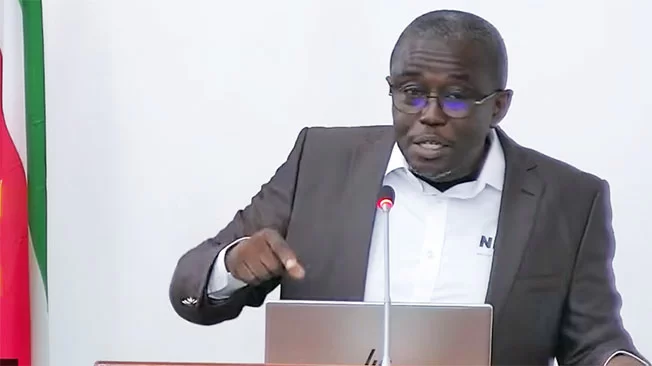
ABOP Assembly Member Stanley Betterson has issued a compelling appeal for restraint in Suriname’s judicial reform process, cautioning against legislation driven by emotional reactions rather than factual analysis. During Thursday’s session of the National Assembly, Betterson emphasized that legal amendments must be grounded in thorough research and demonstrable necessity rather than temporary outrage or political anger.
The seasoned parliamentarian pointed to Suriname’s historical pattern of enacting legislation prompted by indignation, citing the Recall Law, Amnesty Law, and establishment of the Constitutional Court as examples of reactive laws that failed to achieve their intended purposes. “When emotions take precedence, we often miss the fundamental objective of legislation,” Betterson asserted.
Addressing specific proposals to reform the Public Prosecutor’s Office and expand the number of attorneys general, Betterson expressed skepticism. He challenged the assumption that appointing multiple prosecutors-general would automatically improve the institution’s performance. Instead, he called for objective and systematic investigation into complaints about prosecution policies and conduct before considering structural changes.
Betterson highlighted that the Public Prosecutor’s Office already possesses extensive powers, including through the opportunity principle, but noted these authorities carry inherent risks. This reality makes it essential, in his view, to first identify whether potential problems lie in existing laws, organizational structure, management practices, or implementation processes.
While acknowledging potential needs for strengthening the rule of law, Betterson underscored that any reform must be evidence-based rather than politically pressured. He committed to supporting legislative proposals if research demonstrates changes would genuinely contribute to improved administration of justice.
The ABOP representative urged government officials and initiative proponents to set aside emotional responses and adopt a rational, mature approach to judicial reform. Only through this methodical process, he concluded, can Suriname avoid creating laws that merely shift problems rather than resolve them.