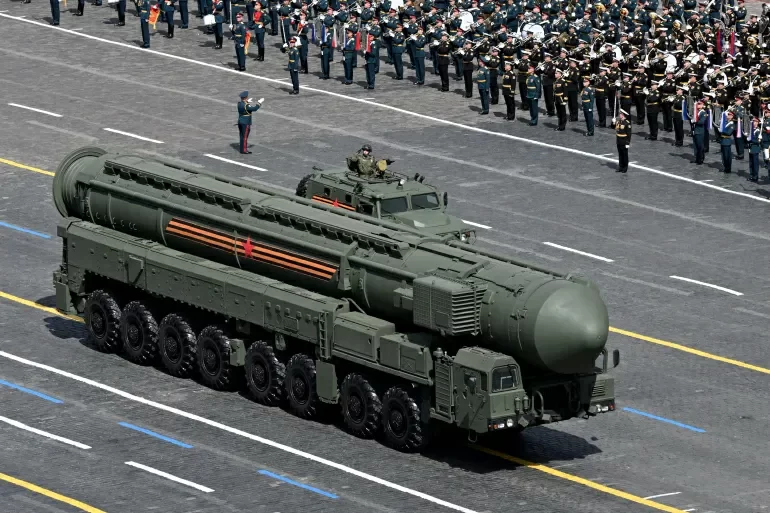
The expiration of the New START treaty—the final major nuclear arms control agreement between Russia and the United States—has officially taken effect, marking a critical juncture in global security dynamics. Russia declared on Wednesday that it no longer considers itself bound by the treaty’s deployed warhead limits, citing the U.S.’s lack of response to President Vladimir Putin’s proposal to extend the pact for an additional year.
Signed in 2010 by former President Barack Obama and Russian President Dmitry Medvedev, New START imposed strict limits on the number of strategic nuclear weapons each nation could deploy. The treaty, which came into force in 2011, was designed to regulate nuclear arsenals and prevent a renewed arms race between the world’s two largest nuclear powers.
With the treaty’s lapse, both Moscow and Washington are now technically free to significantly expand their missile and warhead arsenals—though such moves would entail considerable logistical challenges and time. Russian Foreign Minister Sergey Lavrov accused the U.S. of “consciously ignoring” Moscow’s extension proposal, labeling Washington’s stance as “deeply flawed and regrettable.”
Despite the expiration, U.S. President Donald Trump has expressed openness to negotiating a new agreement. In an interview with The New York Times, he emphasized the need for a “better deal” and insisted that China must be included in future nuclear negotiations.
Arms control experts warn that the collapse of New START could trigger a dangerous new nuclear arms race, exacerbated by China’s rapidly expanding nuclear capabilities. Matt Korda of the Federation of American Scientists cautioned that both nations could now deploy hundreds of additional warheads, potentially doubling their strategic arsenals in a worst-case scenario.
The looming expiration also drew concern from Pope Francis, who issued an urgent appeal urging both countries not to allow the treaty to lapse. “It is more urgent than ever to replace the logic of fear and distrust with a shared ethic focused on the common good,” the pontiff stated during his weekly audience.
The international community now watches anxiously to see whether the U.S. and Russia can negotiate a successor agreement to maintain nuclear oversight—or whether the end of New START will usher in an era of heightened nuclear tension and global instability.