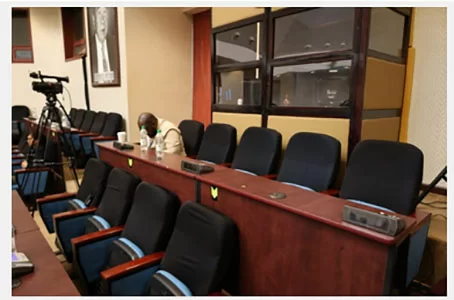
Guyana’s parliamentary authorities have ignited widespread condemnation from media organizations and journalists after implementing stringent new regulations that severely limit press access to legislative proceedings. The controversial measures, enacted by Parliamentary Speaker Manzoor Nadir, impose dual restrictions: drastically reducing the number of journalists permitted in the chamber while simultaneously banning all television cameras from news organizations.
The backlash erupted immediately following Tuesday’s announcement, with particularly fierce criticism emerging across social media platforms. On an official Facebook post by Guyana’s Parliament, media professionals challenged the institution’s justification for the new rules. Parliament officials had claimed that designated press seating remained consistently unoccupied, supporting their decision with a late-night photograph showing empty chairs. Journalists quickly refuted this assertion, explaining that the image was captured after reporters had left to file their stories, calling the representation deliberately misleading.
Further objections center on the prohibition of independent video recording. Journalists now depend exclusively on the legislature’s official livestream, which they describe as technically unreliable with frequent interruptions and substandard quality. Additionally, promised video clips of debates have consistently failed to materialize, leaving news organizations without crucial visual documentation.
Former executives of the Guyana Press Association have joined the chorus of dissent, accusing Parliament of deliberately misleading the public and openly characterizing the restrictions as censorship. The institution’s reference to 2020 COVID-19 protocols as justification has been dismissed by critics as both inappropriate and deceptive.
Multiple journalists report that these measures represent not temporary adjustments but systematic limitations on media access. They warn that excluding cameras and minimizing physical presence of independent media establishes a dangerous precedent that fundamentally undermines democratic oversight and transparency in governmental operations.