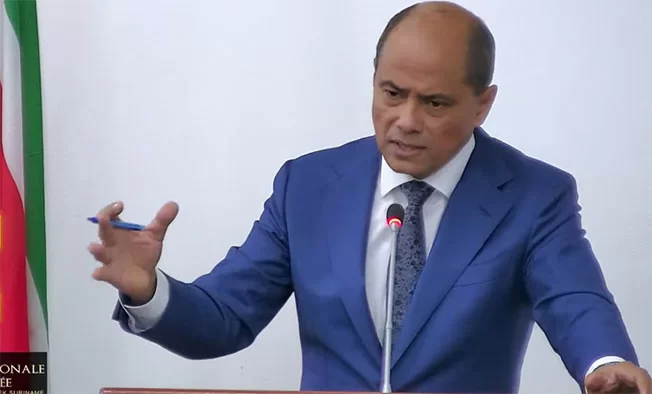
In a comprehensive critique delivered before De Nationale Assemblée, opposition leader Jerrel Pawiroredjo (NPS faction leader) has raised substantial concerns regarding proposed constitutional amendments affecting Suriname’s Public Prosecutor’s Office and judicial system. The parliamentarian questioned the fundamental rationale behind modifying Article 146 of the constitution, noting the explanatory memorandum fails to clearly identify which specific problems the changes intend to resolve.
Pawiroredjo emphasized that evaluating judicial system performance must begin with citizens’ daily experiences with justice, which commences not with judges but rather with police response, criminal investigation, and law enforcement operations. He cited persistent public complaints regarding extended police response times, cumbersome reporting procedures, and deficient official documentation processes.
The opposition leader identified systemic capacity shortages as the core challenge, noting both the Public Prosecutor’s Office and judiciary have faced structural problems for years due to critical staff shortages—including court clerks, prosecutors, deputies, and judges—coupled with inadequate compensation that fails to retain expertise. He advocated for prioritizing recruitment, training, and improved remuneration instead of creating multiple prosecutor general positions.
Regarding cassation jurisdiction, Pawiroredjo acknowledged its potential benefits for legal uniformity and development but expressed reservations about establishing a national Supreme Court. He argued such an institution would pose significant risks in Suriname’s small-scale society by diverting scarce judicial capacity from first and second instance courts where most cases are handled. Instead, he proposed joining the Caribbean Court of Justice as a more realistic and efficient alternative.
Pawiroredjo also cautioned against eliminating the Prosecutor General’s nomination input in appointment processes, warning this could lead to selections based on non-professional criteria and increase vulnerability to external influence. He further criticized proposals to lower the age limit from 70 to 65 as historically inconsistent and potentially disruptive without careful analysis of outflow, continuity, and capacity implications.
The parliamentarian additionally opposed removing the constitutional anchoring of the Prosecutor General’s instruction authority toward police officials, describing this as a serious weakening of the prosecutorial foundation. He concluded that while modernization is necessary, uncontrolled interventions risk causing more damage than they aim to repair.