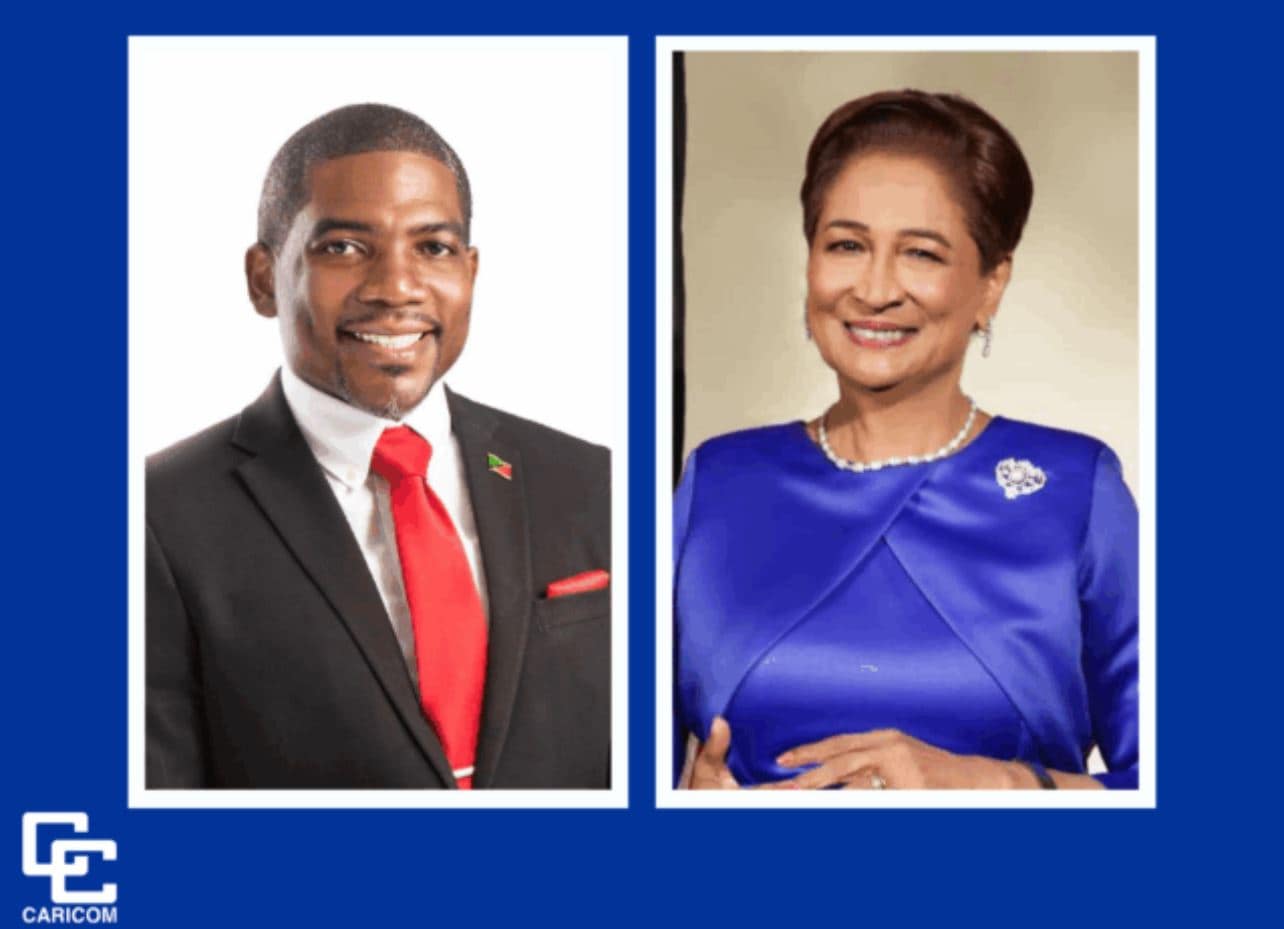
A high-level diplomatic engagement between Caribbean leaders has highlighted deepening fractures within the Caribbean Community (CARICOM) over foreign policy alignment with United States interventionist approaches. The January 30 meeting between St. Kitts and Nevis Prime Minister Terrance Drew, current CARICOM Chair, and Trinidad and Tobago Prime Minister Kamla Persad-Bissessar occurred against a backdrop of regional discord regarding appropriate responses to evolving geopolitical dynamics.
Both leaders characterized their discussions as “productive” and “constructive,” marking a significant departure from Persad-Bissessar’s previously critical stance toward CARICOM. The meeting represented a crucial component of Chair Drew’s strategy of direct engagement with regional counterparts ahead of the upcoming Fiftieth Regular Meeting of CARICOM Heads of Government, scheduled for February 24-27 in St. Kitts and Nevis.
The core tension stems from Trinidad and Tobago’s notable foreign policy shift toward supporting U.S. military operations in Venezuela, which precipitated the ouster of former President Nicolás Maduro. This position places Port of Spain squarely within a minority camp that downplays concerns about hard power approaches in international relations. This stance fundamentally contradicts CARICOM’s traditional unified opposition to hierarchical international orders and represents one of the most significant foreign policy reversals in Trinidad and Tobago’s post-independence history.
The emerging divide creates two distinct camps within the 14-member bloc. The majority maintains commitment to multilateralism and rules-based international order, while a smaller faction, led by Trinidad and Tobago, appears increasingly willing to accommodate U.S.-led interventionist policies. This division threatens to undermine CARICOM’s collective bargaining power and multilateral influence, particularly concerning small states’ reliance on international norms rather than force for protection.
The upcoming CARICOM summit now faces the critical challenge of addressing these divergent foreign policy approaches while attempting to preserve regional unity. The organization must demonstrate its capacity to formulate a coherent response to geopolitical trends that threaten the international gains member states have achieved since independence. How CARICOM navigates this inflection point will significantly determine its future relevance in an increasingly polarized global landscape where hard power dynamics challenge traditional multilateral approaches.