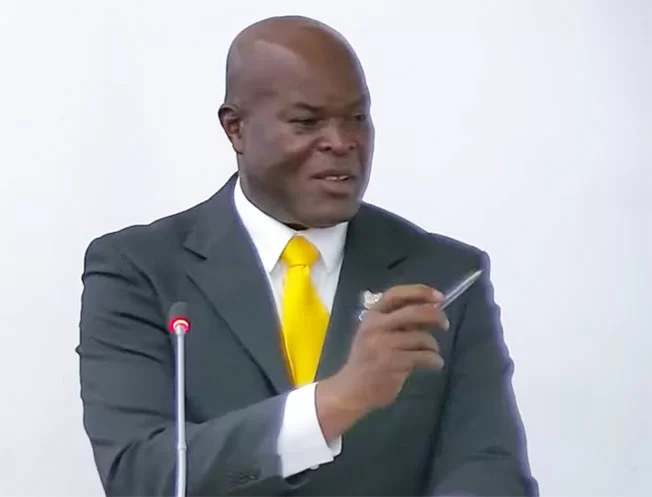
A legislative session in Suriname’s National Assembly descended into visible confrontation between ABOP party leader Ronnie Brunswijk and NDP parliamentarian Ebu Jones during debates on proposed judicial reforms. The tension centered on political accountability for initiative legislation seeking to restructure the judicial system and Public Prosecutor’s Office.
Brunswijk accused Jones of acting as a ‘government accomplice,’ alleging he was ‘playing government’ by sponsoring the reforms. The ABOP leader expressed particular concern about potential erosion of the Prosecutor General’s independence, warning against misuse of legislative initiative powers.
When questioned about possible political influence on prosecutions, appointment procedures, and checks-and-balances, Brunswijk clarified he doesn’t oppose reform in principle but considers this too significant to handle through initiative legislation. He expressed dissatisfaction that the proposals reached parliament ‘suddenly’ without prior governmental explanation, insisting the administration should officially present and defend such weighty matters.
The debate escalated when Brunswijk suggested Jones sought to ‘play government’ through his legislative initiative. Jones responded vehemently, emphasizing parliamentarians’ constitutional right to propose laws and rejecting any characterization as government proxies. He noted Brunswijk’s contradictory position by simultaneously referencing governmental discussions while claiming to speak purely as a legislator.
Despite partial retraction of phrasing, tensions remained high throughout exchanges that required repeated intervention by Assembly Chairman Ashwin Adhin. The presiding official reminded members that points of order and interruptions shouldn’t serve as continuous combat tools, while reaffirming legislators’ right to propose laws.
Following the tumult, Brunswijk reserved final judgment pending explanations from both initiative sponsors and government representatives. He emphasized maintaining critical perspective, stating parliamentarians shouldn’t become ‘yes-men’ and must reject proposals causing societal unrest.