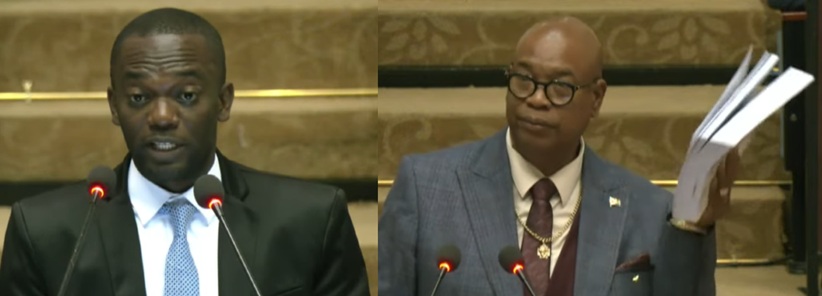
Guyana’s National Assembly witnessed a fierce political confrontation on Monday as the opposition We Invest in Nationhood (WIN) and A Partnership for National Unity (APNU) clashed with the ruling People’s Progressive Party Civic (PPPC) government over the allocation of oil revenues in the record GYD$1.558 trillion 2026 national budget and its perceived failure to address escalating living costs.
In his inaugural parliamentary address, WIN frontbencher Dr. Andre Lewis launched a comprehensive critique of the budget framework, arguing that it disproportionately relies on volatile oil earnings without establishing contingency plans for potential revenue shortfalls. “The budget depends heavily on oil revenues at a time when global oil prices are uncertain and projected to decline,” Lewis stated, emphasizing the absence of clear fiscal safeguards should petroleum income diminish unexpectedly.
The opposition leader further challenged the government’s characterization of the spending plan as “People-Centred,” noting persistent challenges including inflated food prices, unregulated transportation costs, and inadequate housing availability. Lewis contended that coastal, riverain, rural, and mining communities continue experiencing stark disparities in service delivery, infrastructure quality, and economic opportunity despite the budget’s comprehensive scope.
Public Works Minister Juan Edghill offered a robust defense of the government’s fiscal strategy, clarifying that only GY$495 billion—approximately 31.8% of the total budget—derives from petroleum revenues. “That’s the total amount of oil money that is financing this budget,” Edghill asserted, directly countering opposition claims of excessive hydrocarbon dependency.
The minister characterized the budget as a “social contract of inclusion” deliberately designed to channel resources toward working families, small enterprises, agricultural producers, public servants, and marginalized communities. Edghill highlighted substantial allocations including GY$183 billion for education, GY$161 billion for healthcare, GY$113.2 billion for agricultural and food security initiatives, and GY$196.1 billion for transformational transport infrastructure.
APNU representative Vinceroy Jordan joined the critique, dismissing the government’s proposed GY$5,000 pension increase and GY$3,000 public assistance boost as insufficient measures that fail to genuinely prioritize citizen welfare. Jordan advocated for a 35% salary increase for public servants—suggesting 25% as a minimum acceptable compromise—and emphasized that substantial agricultural investment represents the most viable pathway to reduce food prices and enhance national food security.
Minister Edghill concluded by underscoring the government’s comprehensive infrastructure investments in drainage systems, road networks, bridges, ferry services, and airstrips, arguing that these developments indirectly reduce living costs by improving transportation efficiency and market accessibility, particularly in remote regions.