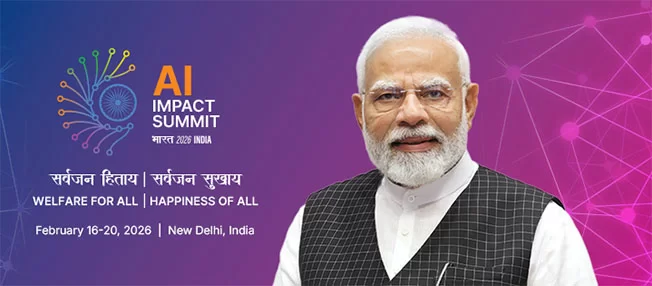
Suriname stands at the forefront of an emerging technological partnership that could redefine its digital future, as India actively cultivates alliances with Global South nations to advance human-centric artificial intelligence frameworks. This strategic positioning comes ahead of the landmark India–AI Impact Summit 2026, scheduled for February 16-20 in New Delhi—the first global AI convening specifically focused on the Global South’s priorities.
The summit represents a significant pivot in international AI discourse, shifting emphasis from purely safety-oriented discussions toward practical implementation, sustainable development, and measurable societal benefits. Core themes include ‘AI for All’ initiatives, female leadership in technology (‘AI by Her’), and youth-driven innovation ecosystems, collectively aiming to foster responsible and inclusive AI development.
India’s relevance to Suriname stems from its distinctive approach to technological democratization. Unlike Western tech giants that typically operate closed systems and data monopolies, India has championed open-source AI models, data sovereignty, and affordable technological solutions. The nation now boasts approximately 16% of global AI talent and hosts the world’s fastest-growing community of AI developers, creating technologies specifically designed to function on low-cost devices with limited or unstable internet connectivity—conditions familiar to many Surinamese communities.
This collaboration builds upon existing bilateral agreements, including a 2023 Memorandum of Understanding covering digital infrastructure and technological development. India’s proven digital platforms—such as the Aadhaar identity system and UPI payment network—offer tangible models for inclusive digitization that Suriname could enhance with AI integration. According to Indian Ambassador Subhash Gupta, this could translate to improved governance efficiency, enhanced public services, and greater financial inclusion.
The partnership extends beyond government systems to address Suriname’s economic needs. As artificial intelligence disrupts traditional Business Process Outsourcing (BPO) sectors worldwide, India’s experience in retraining millions of workers for AI-driven roles—including data annotation, system monitoring, and quality control—could help Suriname future-proof its labor market. Additionally, Indian AI applications show particular promise for Suriname in agriculture (soil and pest analysis), healthcare delivery, judicial systems, climate services, disaster preparedness, education, and the emerging oil and gas sector.
India’s Bhashini project, focusing on AI-powered multilingual translation, holds special significance for linguistically diverse Suriname, offering tools to bridge communication gaps across its multicultural society.
Through participation in the New Delhi summit, Suriname gains not only access to cutting-edge technology and expertise but also a voice in shaping international AI ethics, regulatory frameworks, and responsible implementation guidelines. Ambassador Gupta emphasizes that this moment represents a critical strategic opportunity for Suriname to position itself not merely as an adopter of technology, but as an active co-creator of AI solutions that balance economic advancement with social inclusion.