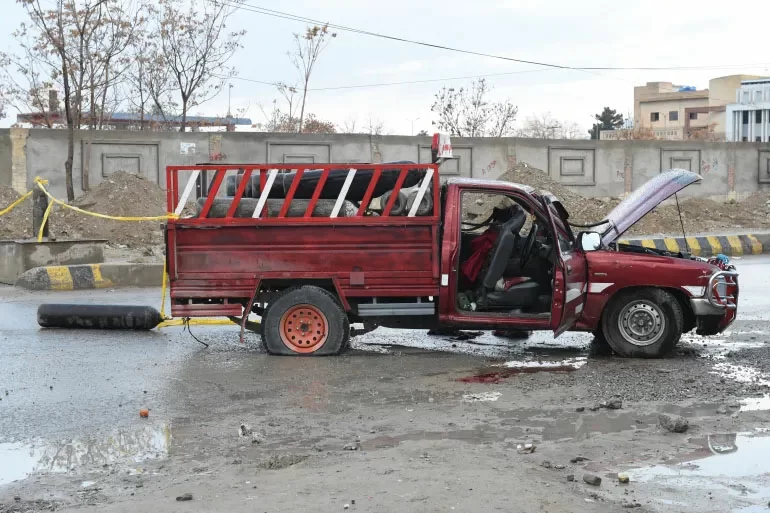
A devastating escalation of violence in Pakistan’s Balochistan province has left nearly 200 dead, including 31 civilians, 17 security personnel, and 145 militants from the banned Balochistan Liberation Army (BLA). The coordinated attacks across more than a dozen locations in the mountainous Sulaiman and Kirthar ranges represent one of the most brutal separatist offensives in decades of conflict.
The Pakistani military described the 40-hour firefight as a ‘desperate’ wave of attacks, though officials dismissed BLA claims of killing 84 security force members. Information Minister Attaullah Tarar characterized the assaults as ‘the last convulsions of a cornered enemy,’ maintaining the official narrative of unwavering control.
Behind government assurances lies a more complex reality. The conflict stems from long-ignored grievances including political marginalization, economic injustice, and widespread corruption. Despite Balochistan’s immense mineral wealth, residents remain among Pakistan’s poorest, with development projects like the $46 billion China-Pakistan Economic Corridor (CPEC) largely benefiting central authorities rather than local communities.
Islamabad’s standard response attributes separatist violence to ‘foreign interference’—primarily from historical rival India. This framing positions the military as defender of territorial integrity rather than participant in an internal conflict. The case of Kulbhushan Jadhav, an Indian citizen sentenced to death for espionage in 2016, serves as Islamabad’s prime evidence of external meddling.
Yet ground realities tell a different story. Security sources acknowledge that while armies can neutralize militants, they cannot neutralize grievances. The rebellion draws oxygen from persistent complaints about resource exploitation, inadequate public services, and security operations that often place civilian families in the crossfire.
Balochistan’s strategic significance extends beyond Pakistan’s borders. The province—larger than Germany—plays a crucial role in regional power dynamics involving Chinese economic ambitions, Iranian sectarian politics, U.S. containment strategies, and Indian counter-balancing efforts. Its porous borders with Afghanistan and Iran provide militants with strategic depth.
The human cost of the conflict is etched into the region’s collective memory, from the 2013 Hazara attack that left wounded scattered indiscriminately, to the 2016 Quetta police academy massacre where cadets questioned why they were left unarmed. These incidents represent both security failures and a crumbling social contract.
True stability in Balochistan will require moving beyond body counts and kinetic responses. It demands recognizing that separatism springs from genuine discontent, that development must mean inclusion rather than exploitation, and that political dialogue is not reconciliation but necessity. Whether recent violence represents a turning point toward sustainable peace or merely an intermission before the next storm depends on who gets to write the next chapter.