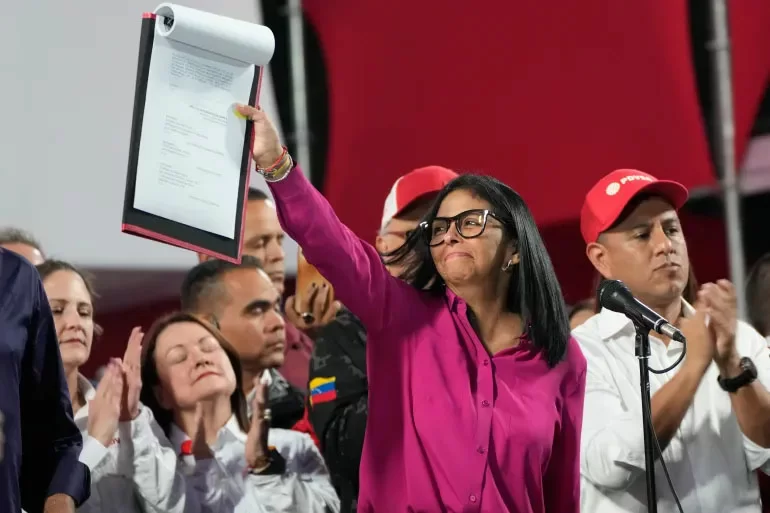
In a significant policy shift, Venezuela’s acting President Delcy Rodriguez has signed into law legislation that opens the nationalized oil market to privatization measures. The move comes alongside the US Treasury Department’s announcement of eased sanctions on Venezuelan oil transactions, marking a coordinated effort to reshape the country’s energy sector.
The newly enacted law grants private companies substantial control over production and sales operations within Venezuela’s oil industry. A key provision mandates that commercial disputes be resolved outside Venezuelan courts—a deliberate concession to international investors who have expressed concerns about the socialist party-dominated judicial system.
Concurrently, the US Treasury Department has authorized certain transactions by the Venezuelan government and state oil company PDVSA when conducted through US entities for export and trade purposes. This sanctions relief represents a calculated effort to make Venezuela’s oil infrastructure more appealing to foreign capital despite ongoing political turbulence and economic instability under the Maduro government.
The reforms follow increased pressure from Washington since the controversial detention of President Nicolás Maduro by US authorities in early January. The Trump administration has explicitly pushed for Venezuela to open its oil industry to foreign investment, with the former president and his allies asserting that Venezuelan oil “should belong to the US.”
Rodriguez has hailed the legislation as economically beneficial, describing it as crucial for “the future of Venezuela and its people.” The law additionally caps government royalties at 30 percent—a provision specifically designed to attract international energy companies.
These developments signal a historic transformation for Venezuela’s oil character, which has maintained strong state control since nationalization in the 1970s and intensified government management under Hugo Chavez. The United States now plays an active role in determining the conditions under which Venezuelan oil enters global markets, though critics have raised concerns about violations of Venezuelan sovereignty and questioned the legality of American intervention.