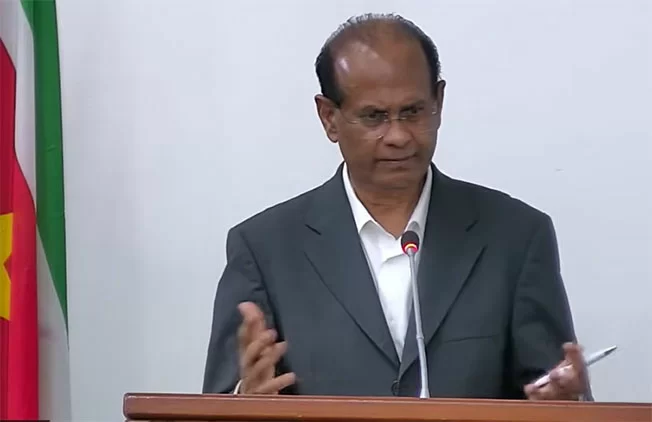
Suriname is embarking on a significant constitutional transformation with proposed amendments aimed at establishing two groundbreaking institutional reforms: the creation of a Supreme Court with cassation jurisdiction and the restructuring of the Public Prosecutor’s Office. Rabin Parmessar, chairman of the reporters’ committee and NDP faction leader, presented detailed justifications for these changes during Thursday’s parliamentary session.
The constitutional amendments target Articles 133, 139, 140, 141, and 146, with the addition of a new Article 139a. Article 134 will undergo only linguistic adjustments. The core reforms focus on two fundamental pillars:
1. Establishment of a third judicial instance (cassation): The High Court of the Republic of Suriname
2. Restructuring of the Public Prosecutor’s Office under a College of Attorneys-General
Parmessar explained that the current Article 139 presents a legal obstacle by identifying the Court of Justice as the supreme judicial body. The proposed amendment would remove this barrier while establishing constitutional foundations for the Supreme Court as the highest judicial authority with cassation jurisdiction. Cassation would involve legal review rather than factual re-evaluation of cases, ensuring proper application and interpretation of law within statutory limits.
While general support exists for a third judicial instance, debate continues regarding its implementation structure. Options include establishing a national Supreme Court or joining regional solutions like the Caribbean Court of Justice. Parmessar advocates for a phased approach, allowing government and judicial institutions time to develop necessary institutional and legal frameworks.
Capacity and quality emerge as critical concerns. Parmessar emphasized that the Supreme Court must be meticulously structured and staffed by qualified, integrity-driven jurists to ensure judicial quality and independence. Given current limitations within the magistracy, he proposed considering international embedding and participation, particularly during the initial phase.
Article 139a would create constitutional space for temporary or supplementary cassation functions by foreign or international judicial bodies under legally defined conditions. This addresses both capacity constraints and the importance of international judicial integration for investor confidence.
Current constitutional requirements regarding Surinamese nationality and residency for judicial members (Article 141) could hinder international expertise acquisition. Parmessar proposed creating exceptions specifically for Supreme Court members to facilitate international participation.
The second major reform involves transitioning prosecutorial leadership from a single Attorney-General to a College of Attorneys-General. While acknowledging historical concerns about prosecutorial independence and lifetime appointments, Parmessar argued that collegial leadership could enhance checks and balances, reduce personal dependency, and improve decision-making transparency.
Addressing concerns about Suriname’s small size, Parmessar contended that population scale shouldn’t determine judicial structure adequacy. Key considerations should include power concentration levels, decision-making transparency, and policy consistency maintenance. A collegial system could foster internal debate, quality control, and shared responsibility within compact societies.
Parmessar acknowledged potential risks including bureaucratic delays, unclear authority distribution, and informal political appointments. He stressed the need for clear appointment criteria, decision-making procedures, and responsibility definitions through subsequent legislation.
The explanatory memorandum requires substantial strengthening to clarify reform necessities, rule-of-law objectives, and quality assurance mechanisms. Parmessar positioned these initiatives within broader context: Suriname must make institutional choices aligning with modern requirements for legal protection and judicial development while considering practical capacity and implementation realities.
The National Assembly continues discussions on these initiative laws on Friday.