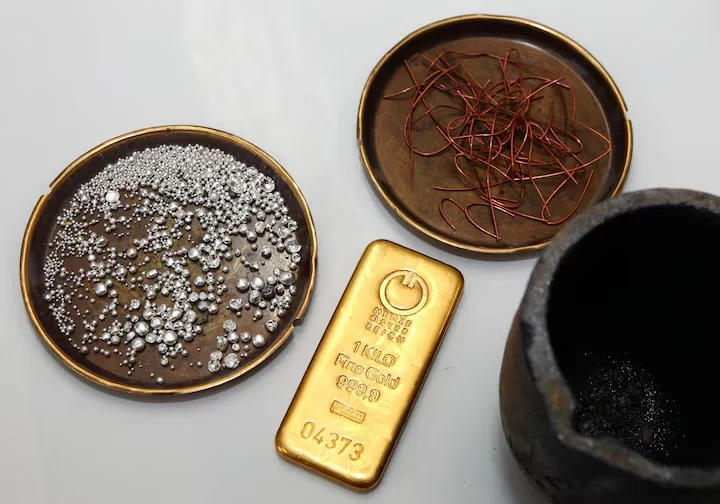
Financial markets witnessed a significant reversal in precious metals on Friday as gold, silver, and copper prices retreated sharply from their record-breaking highs earlier in the week. The sell-off was triggered by investors’ growing nervousness over diminishing expectations for aggressive U.S. interest rate cuts and a strengthening dollar.
The market sentiment shifted dramatically following President Donald Trump’s announcement appointing former Federal Reserve governor Kevin Warsh as the new chairman of the U.S. Central Bank. This development bolstered the dollar index, which measures the currency’s value against other major currencies. Financial analysts perceive Warsh as a more rational policymaker who is less likely to implement substantial rate reductions, prompting investors to unwind their positions in precious metals.
A stronger dollar typically makes dollar-priced commodities more expensive for holders of other currencies, potentially suppressing demand. This dynamic plays a crucial role in trading decisions for funds that track price movements through sophisticated algorithmic models.
January had seen remarkable gains for precious metals, with gold advancing 17% and silver surging 39%. Friday’s sharp correction followed several days of relatively low trading volumes during which speculative activity had driven prices to unsustainable levels. Gold declined 4.7% to $5,143.40 per ounce after reaching a record high of $5,594.80 on Thursday. Silver experienced an even more dramatic drop of 11% to $103.40, down from its peak of $121.60.
Independent analyst Ross Norman observed, ‘Precious metals have rediscovered gravity. Speculators are being reminded that these are markets where prices can move in both directions.’
Copper also joined the downward trend, losing 1.1% to trade around $13,465 per ton after achieving its own record high of $14,527.50 on Thursday. Following gains of 11% in December and 6% in January, Macquarie analysts noted that the copper market remains volatile and heavily traded.
With Chinese New Year approaching on February 16th, when China—the world’s largest consumer of industrial metals—will close trading for a week, market participants anticipate further price declines. Chinese investors are particularly keen to reduce their positions to avoid potential volatility during the holiday period.
Tom Price, analyst at Panmure Liberum, commented: ‘Chinese investors don’t want to risk exposure in these swinging markets. Just look at what happened in merely twelve hours.’