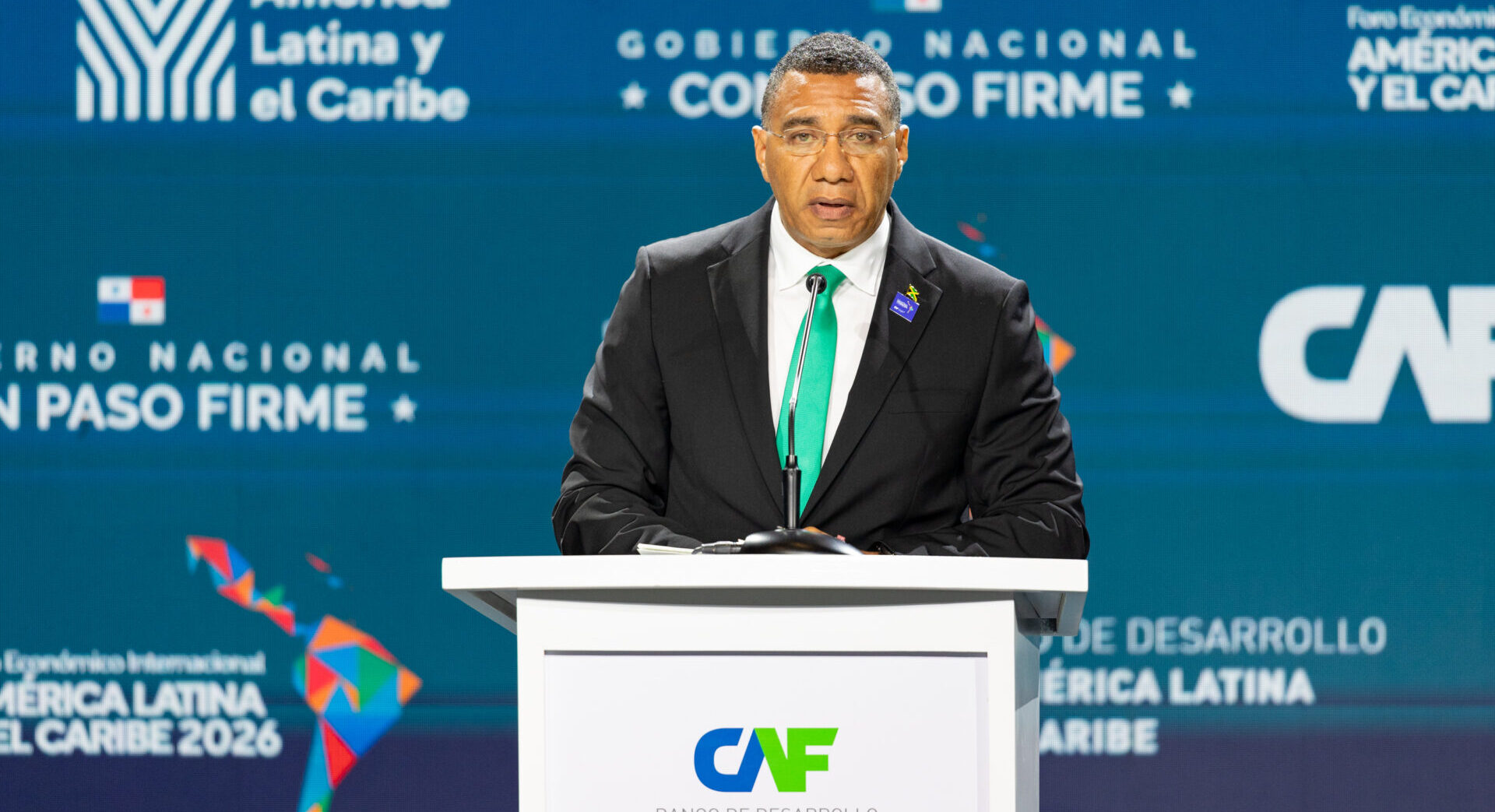
Jamaican Prime Minister Andrew Holness has delivered a compelling address at CAF’s second International Economic Forum in Panama City, challenging Latin American and Caribbean nations to redefine their international standing. Speaking before an assembly of regional leaders, policymakers, and global investors, Holness articulated a vision of regional transformation from perceived vulnerability to recognized global leadership.
The Prime Minister categorically rejected the conventional narrative of regional fragility, asserting that “vulnerability is not destiny.” He positioned the Caribbean not as peripheral to the global system but as fundamental to its stability, sustainability, and future expansion. Holness enumerated the region’s considerable advantages, including strategic geographical positioning, demographic youth, abundant natural resources, agricultural capacity, renewable energy potential, creative industries, and robust democratic frameworks.
To translate these assets into global influence, Holness outlined a tripartite strategic approach: developing a cohesive regional competitiveness agenda focused on connectivity, logistics, energy security, and digital transformation; strengthening institutional frameworks to ensure stability; and pursuing dynamic diplomacy that engages both traditional partners and emerging markets.
Drawing from Jamaica’s recent experience, the Prime Minister highlighted how disciplined fiscal management and institutional reforms enabled rapid recovery from Hurricane Melissa, a Category Five storm that caused extensive damage. This resilience, he noted, demonstrates the region’s capacity to withstand external shocks when supported by strong governance and international cooperation.
Holness extended specific invitations to investors to explore Jamaica’s expanding opportunities in infrastructure, logistics, energy, manufacturing, tourism, and digital innovation. The Jamaican government, in partnership with CAF, has organized a dedicated Investment Forum to channel resources toward rebuilding efforts and sustainable development.
The overarching message emphasized that the Caribbean’s future as a significant global actor depends on deliberate collective action, regional cohesion, and proactive international engagement rather than passive reaction to global trends.