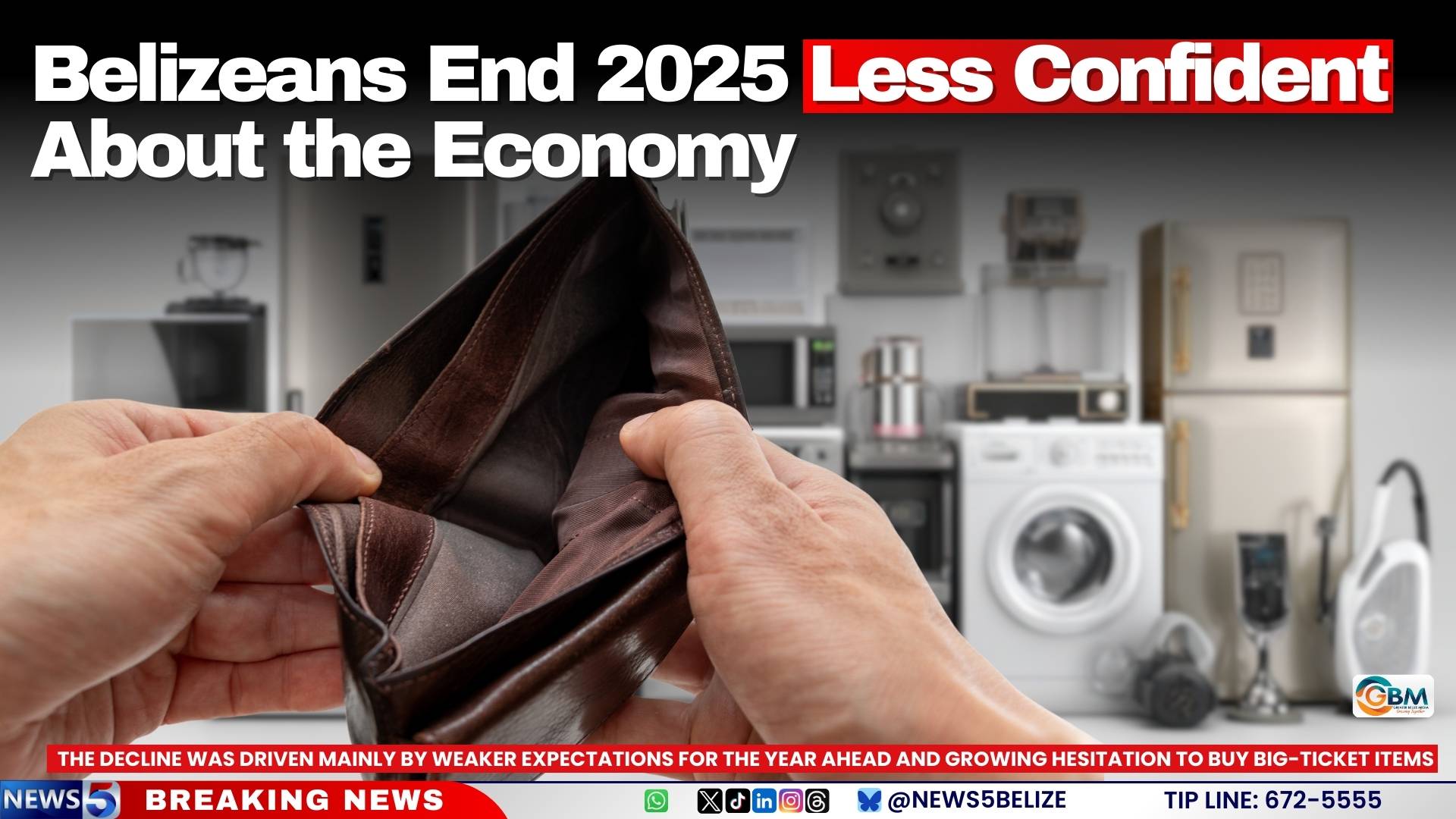
BELIZE CITY – Belize concluded 2025 with a notable decline in economic optimism among its citizens, as revealed by the latest Consumer Confidence Index (CCI) published by the Statistical Institute of Belize. The comprehensive survey, which gauges public sentiment regarding national economic conditions, personal financial situations, and major purchasing readiness, recorded a concerning downturn in December.
The index retreated to 47.9 points in the final month of 2025, down from November’s reading of 48.2. This downward movement places the indicator firmly below the critical 50-point threshold, signaling that a majority of consumers now harbor pessimistic rather than optimistic views about economic prospects. The deterioration primarily stemmed from diminished expectations for the upcoming year and increased reluctance to commit to significant expenditures.
Geographic analysis revealed substantial regional disparities in economic sentiment. Stann Creek District experienced the most pronounced confidence collapse, plummeting from an optimistic 52.9 in November to 48.3 in December. Conversely, Toledo District demonstrated remarkable resilience, surging from 48.7 to 57.4—a dramatic improvement largely attributed to strengthened regional economic expectations.
The comprehensive study further identified a growing urban-rural confidence divide. Urban consumers reported modest gains in economic optimism, while their rural counterparts exhibited heightened caution, particularly regarding major acquisitions such as vehicles, appliances, and household furnishings. This geographical polarization suggests varying economic experiences across Belize’s diverse demographic landscape.
The CCI serves as a crucial barometer of economic health, measuring citizens’ perceptions across multiple dimensions including national economic conditions, household financial stability, and purchasing propensity. The latest findings indicate growing consumer restraint that could potentially impact economic activity in the coming months.