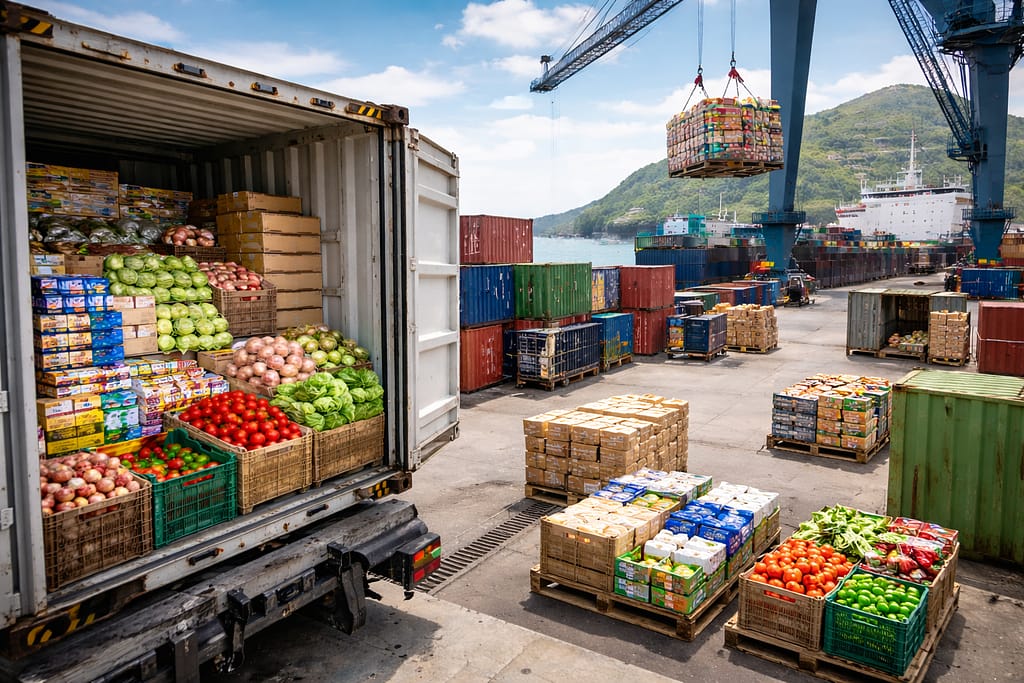
The Government of Antigua and Barbuda has formally adopted a comprehensive agricultural development strategy targeting a 15% reduction in specific food imports through enhanced domestic production capabilities. This initiative aligns with the broader CARICOM “25 by 2025 plus five” framework, a regional pact designed to bolster food security across Caribbean nations.
Following a Cabinet endorsement, officials from the Ministry of Agriculture received approval to implement a multi-phase import substitution program. The strategy will concentrate initially on key sectors: livestock rearing and the cultivation of staple root crops and vegetables.
Maurice Merchant, Director General of Communications within the Prime Minister’s Office, articulated the administration’s stance during a post-Cabinet media briefing. He confirmed the 15% target was established as a feasible initial benchmark to advance critical national objectives. These include fortifying food security buffers, enhancing the economic resilience of local farming communities, and stimulating job creation in rural districts.
A central economic argument presented to Cabinet highlighted the substantial financial savings achievable through increased domestic output. Projections indicate that local production could replace approximately 1,200 heads of imported livestock annually, representing an estimated $1.7 million conservation in foreign expenditure.
The detailed plan identifies several priority commodities for immediate import substitution. The list encompasses onions, tomatoes, sweet peppers, cassava, sweet potatoes, alongside sheep and swine production. A dedicated focus on scaling output in these categories is expected to significantly curtail dependency on foreign suppliers.
Merchant emphasized the administration’s serious view of food security as a paramount national concern. Consequently, the Gaston Browne cabinet has issued directives for the expedited execution of the outlined agricultural measures. This policy forms an integral component of a long-term vision to minimize vulnerability to external supply chain disruptions and ensure the enduring sustainability of the nation’s agricultural sector.