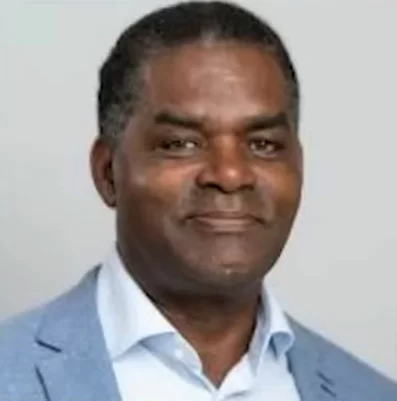
A comprehensive overhaul of Suriname’s judicial system has drawn sharp criticism from prominent legal scholar Hugo Fernandes Mendes, who argues that current reform proposals lack coherence and clear justification. During a Friday evening lecture before the Surinamese Jurists Association (SJV), Fernandes Mendes identified two fundamental issues: the position of the Attorney General and the establishment of a third judicial instance as central to meaningful judicial reform.
The legal expert expressed particular concern about the proposed College of Attorneys-General, noting that the explanatory memorandum fails to clearly identify which specific problem this new institution would solve. “Is the Attorney General’s portfolio too extensive? Does this address operational management or policy direction? Without clear objectives, a constitutional amendment on this point becomes difficult to justify,” Fernandes Mendes contended. He suggested that strengthening the Public Prosecutor’s Office could be achieved more effectively through expanding the number of advocate-generals and chief officers rather than creating additional administrative layers.
Fernandes Mendes emphasized that the judiciary serves as the primary check on the Public Prosecutor’s Office, referencing recent cases where courts had reprimanded prosecutors. He simultaneously highlighted the concerning absence of systematic oversight mechanisms for both the judiciary and the Public Prosecutor’s Office—a deficiency requiring thorough examination.
The legal scholar made a compelling case for introducing cassation court proceedings as Suriname remains the only CARICOM nation without a third judicial instance, despite three-tier judicial systems being the international standard. Such reform would contribute to legal development, legal certainty, and public trust in the rule of law while enhancing confidence among international investors.
Fernandes Mendes outlined three potential models: a Supreme Court of Suriname, affiliation with the Supreme Court of the Netherlands, or recognition of the Caribbean Court of Justice’s (CCJ) appellate jurisdiction. Each option presents distinct advantages and challenges. A national Supreme Court would only achieve credibility with international composition to prevent political influence and ensure continuity.
The CCJ emerged as a serious contender, though Fernandes Mendes stipulated strict preconditions: guaranteed application of Surinamese law, Dutch procedural language, and a separate chamber for Surinamese cases staffed by judges from the Dutch-Caribbean-Surinamese legal family holding sessions in Suriname.
Fernandes Mendes warned that current reforms focus too narrowly on the judiciary while neglecting constitutional relationships between the courts, parliament, and government. He advocated for comprehensive constitutional revision and establishment of a State Commission on Constitutional Governance. The scholar also expressed concerns about the weak position of the Constitutional Court, describing it as inconsistent with both the Constitution and the Constitutional Court Act, necessitating strengthened independence to restore constitutional balance.
Finally, Fernandes Mendes urged legislators to amend the Constitution to enable organic laws that facilitate deliberate choices regarding the third instance with clear criteria. Without a coherent vision regarding the roles of the Attorney General, Public Prosecutor’s Office, and judiciary, he cautioned, Suriname risks further institutional fragmentation.