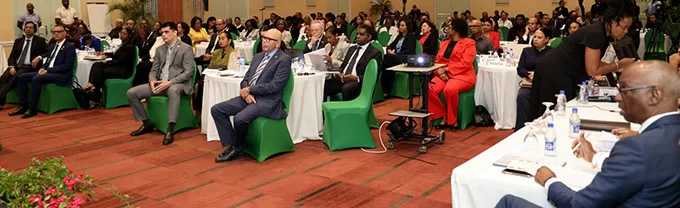
The Suriname Bar Association (SOVA) has delivered a substantive critique of proposed judicial reforms during a national conference on modernizing the justice system. Legal experts argued that genuine modernization must transcend mere administrative restructuring and instead focus on strengthening legal certainty, transparency, integrity, and institutional resilience.
The association presented a comparative analysis of two competing governance models: the existing single Attorney General system versus a proposed College of Attorneys General. SOVA emphasized that this choice fundamentally impacts core rule-of-law principles including accountability, operational efficiency, and democratic oversight rather than representing a simple organizational decision.
SOVA’s analysis revealed that the current single Attorney General model offers distinct advantages in clear accountability structures, rapid decision-making capabilities, and direct crisis intervention. However, the association acknowledged vulnerabilities to personal dependency and political pressure when institutional safeguards remain underdeveloped.
The collegial model, while potentially enhancing policy continuity and internal checks, presents significant risks for Suriname’s small legal jurisdiction. Collective decision-making could introduce bureaucratic delays, leadership ambiguity, and responsibility diffusion—critical concerns for a nation requiring swift, transparent judicial processes.
The bar association cautioned against falsely equating modernization with structural overhaul, proposing instead comprehensive reforms within the existing framework. Key recommendations include establishing mandatory consultation protocols for high-stakes prosecution decisions involving state security, large-scale corruption, or political figures.
SOVA advocated for publicly accessible prosecution guidelines to increase legal predictability and reduce risks of selective or politically influenced enforcement. The association stressed that transparency serves as the foundational element for public trust in judicial institutions.
Additional proposals include implementing fixed statutory terms for the Attorney General, clearly defined dismissal grounds, and enhanced procedural protections during suspensions or removals. These measures aim to balance independence with institutional stability.
The association called for clearer demarcation between the Prosecution Service and the Justice Ministry, recommending written documentation of policy directives, parliamentary oversight of interventions, and strengthened separation of powers to prevent informal influence.
SOVA concluded that a properly empowered Attorney General—supported by robust legal safeguards, transparent policies, effective checks and balances, and visible accountability mechanisms—can deliver judicial security comparable to collegial governance systems. The central question remains how to create responsible, transparent, and resilient institutions rather than simply increasing the number of officeholders.