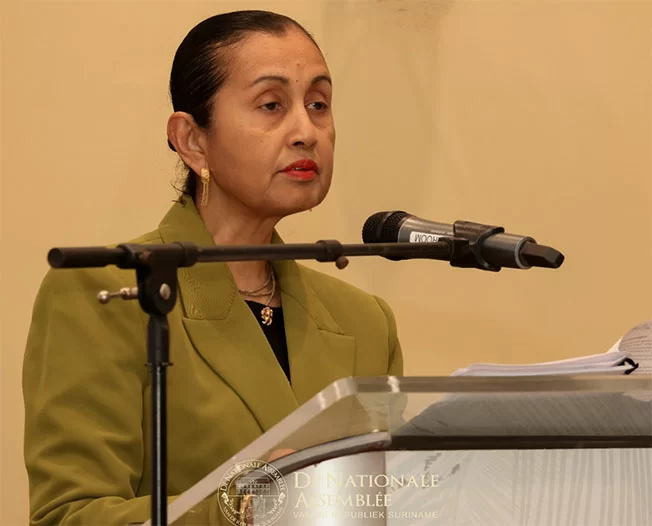
Suriname’s Prosecutor General Garcia Paragsingh has issued a compelling call for comprehensive judicial modernization, declaring it an “inevitable necessity” rather than a choice to future-proof the nation’s rule of law. The urgent appeal came during her opening address at the Judicial Modernization Congress held on Thursday.
Paragsingh emphasized that evolving societal dynamics, increasingly sophisticated criminal activities, and rising public expectations demand thoughtful and systematic reforms. She characterized the judiciary as a fundamental pillar of constitutional democracy that requires regular critical assessment—not to dismantle functioning systems but to strengthen areas needing improvement.
Globally, judiciaries face parallel challenges including complex criminality, rapid technological advancement, capacity constraints, and heightened societal demands for transparency, efficiency, and independence. The Prosecutor General stressed that modernization must align with national legal traditions while addressing these contemporary pressures.
A central congress theme involves the potential establishment of a third judicial instance—a significant structural change requiring meticulous consideration due to implications for legal development, jurisprudence consistency, and citizen protection. Paragsingh highlighted that such reforms must balance efficiency, accessibility, and processing times while maintaining public trust.
Closely tied to this discussion is the positioning and operation of prosecution services within a third instance framework. Paragsingh advocated for an independent, expert prosecution unit with clear mandates, emphasizing its vital role in maintaining judicial quality and consistency through professional collaboration with the judiciary.
The address also covered modernization needs within the Public Prosecutor’s Office, which operates at the intersection of investigation, prosecution, and adjudication. Paragsingh underscored the necessity for ongoing investment in quality, expertise, and national-international cooperation, recognizing the institution’s unique constitutional responsibility.
Concluding her remarks, the Prosecutor General framed the congress as action-oriented rather than academic, aimed at formulating concrete, realistic steps forward. By synthesizing national and international experiences, Suriname can make informed choices for its judicial future, working toward a shared vision of a modern, effective, and authoritative judiciary.