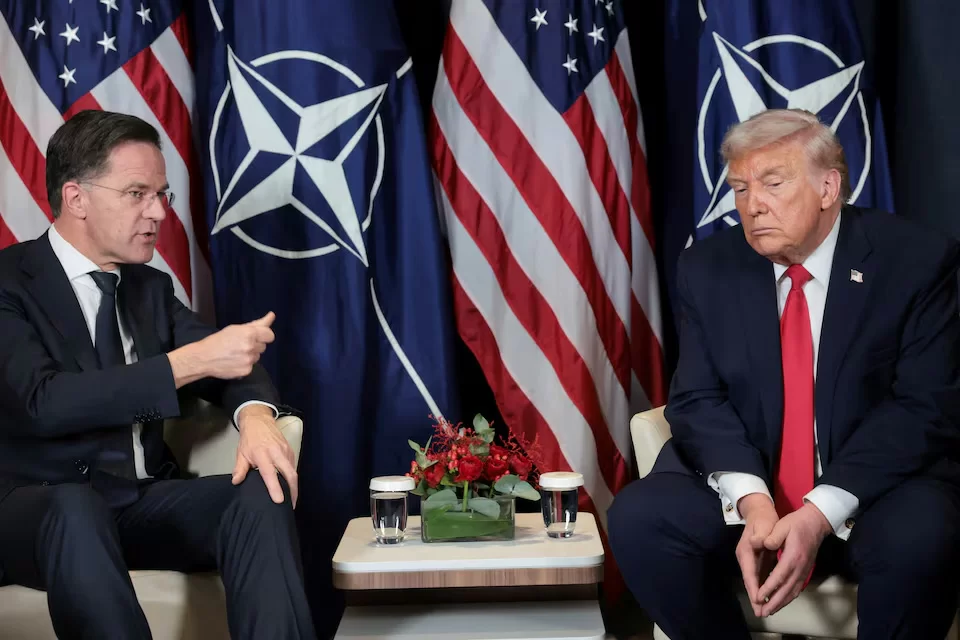
A complex geopolitical landscape is unfolding in the Arctic region as NATO members assert national sovereignty while addressing collective security concerns. The situation emerged following diplomatic exchanges at the World Economic Forum in Davos, where U.S. President Donald Trump met with NATO Secretary General Mark Rutte.
Danish Defense Minister Troels Lund Poulsen clarified through social media that Secretary General Rutte cannot negotiate on behalf of Denmark or Greenland regarding the territory, while simultaneously praising his efforts to maintain alliance unity. Lund Poulsen established Denmark’s unequivocal position: “We will not cede sovereignty over any parts of the kingdom,” though he acknowledged the positive development of NATO’s increased focus on Arctic security.
Polish President Karol Nawrocki expressed hope for a diplomatic resolution to the Greenland matter, suggesting talks between the Danish Prime Minister, U.S. President, and Greenland’s own authorities. This perspective contrasts with Greenlandic Vice Premier Mute Egede’s firm stance that any transfer attempts are “unacceptable,” emphasizing that “It is our land, we determine the future.”
Amid these sovereignty discussions, U.S. General Alexus Grynkewich, NATO’s supreme commander in Europe, raised concerns about growing Russian-Chinese cooperation in the Arctic, including joint sea and air patrols. This development has prompted NATO to continuously explore methods to strengthen its Arctic positioning.
Germany’s Vice Chancellor Lars Klingbeil proposed strategic dialogue with France regarding nuclear deterrence capabilities to enhance European security, clarifying this doesn’t question NATO’s nuclear umbrella but represents an appropriate response to current geopolitical realities.
According to informed sources, the United States and Denmark will revise their 1951 defense agreement concerning Greenland, with European allies also committing to enhanced Arctic security. Crucially, any arrangements will not place U.S. bases on Greenland under American sovereignty. The existing Pituffik Space Base remains instrumental to U.S. missile defense systems.
Russian President Vladimir Putin dismissed interest in Greenland’s ownership, stating the U.S. and Denmark must resolve matters bilaterally, while criticizing Denmark’s colonial history there as largely irrelevant today. Chinese Foreign Minister Guo Jiakun rejected what he termed “so-called Chinese threats” and condemned using China as pretext for self-interest.
The Wall Street Journal reported that discussions between NATO’s Secretary General and Trump included potential U.S. preferential rights to invest in Greenland’s mineral resources, aiming to counter Russian and Chinese influence.
French Finance Minister Roland Lescure welcomed Trump’s decision to withdraw tariff threats against European countries as “a first positive sign,” emphasizing de-escalation while maintaining vigilance.
Danish Prime Minister Mette Frederiksen called for constructive negotiations respecting Denmark and the EU’s territorial integrity: “We can discuss virtually everything: security, investments, economy. But our sovereignty is non-negotiable.” This followed Trump’s unexpected announcement withdrawing tariffs and abandoning military actions to acquire Greenland.